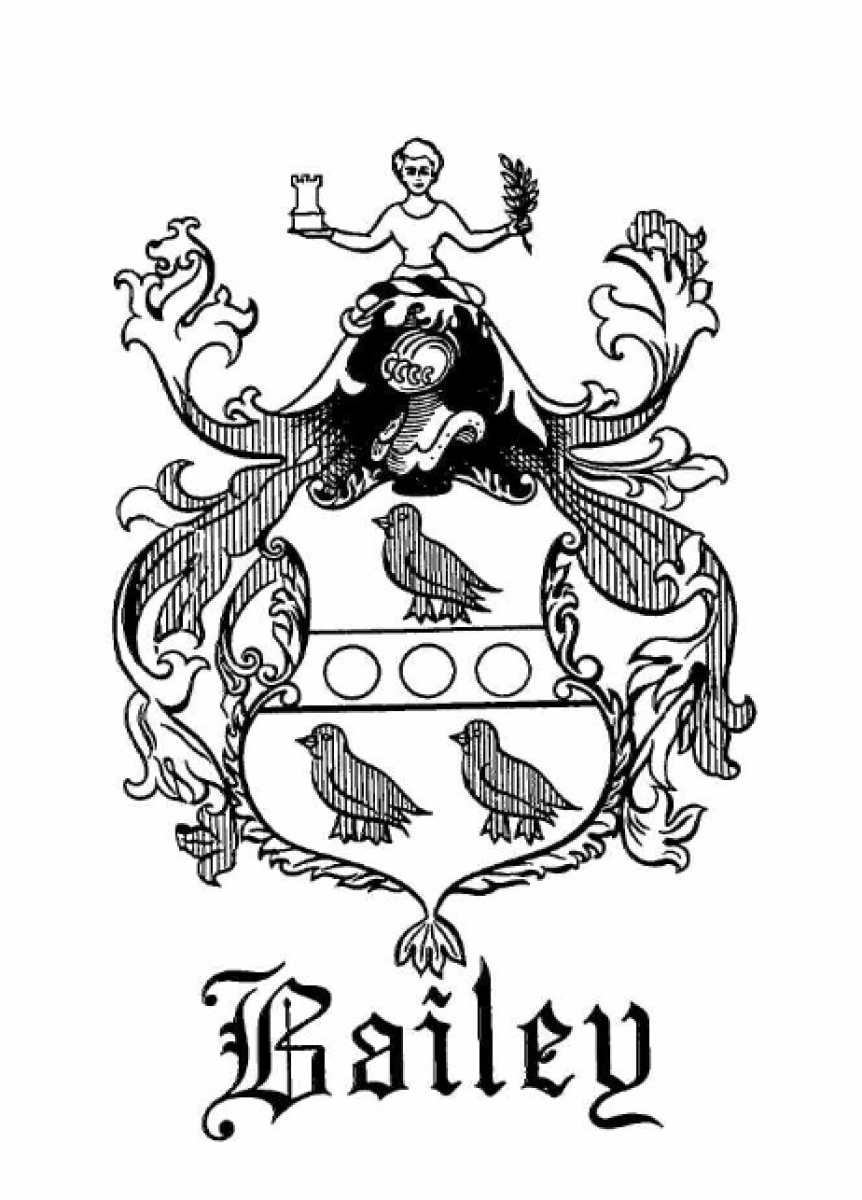
The Bailey Surname
The Bailey surname is English in origin, coming from the Anglo-French.
Name Origin & History
The Bailey surname is one of the most distinguished names in early American colonial history. Bailey is an occupational surname 'bailler' (to deliver) — or an occupational surname for a bailiff or steward. Less often, Bailey could also be attached to those who lived near a castle or stronghold.
The name arrived in England with the Normans after 1066, linked to French titles and places like Bailleul-En-Vimeu in Normandy. It spread after the Norman Conquest and is common in the UK, US, and Scotland.
Spellings & Pronunciations
- English and Irish Variations
- Bailey, Bayley, Baily, Baylye, Baley, Baly
- Scottish Variations
- Baillie, Baillie
- Modern Variations
- Baylee, Bayleigh, Baylie, Baili
- Historical Records
- First Recordings: Early records show variations like Roger le Baylly (1230) and Ralph de Baylegh (1246).
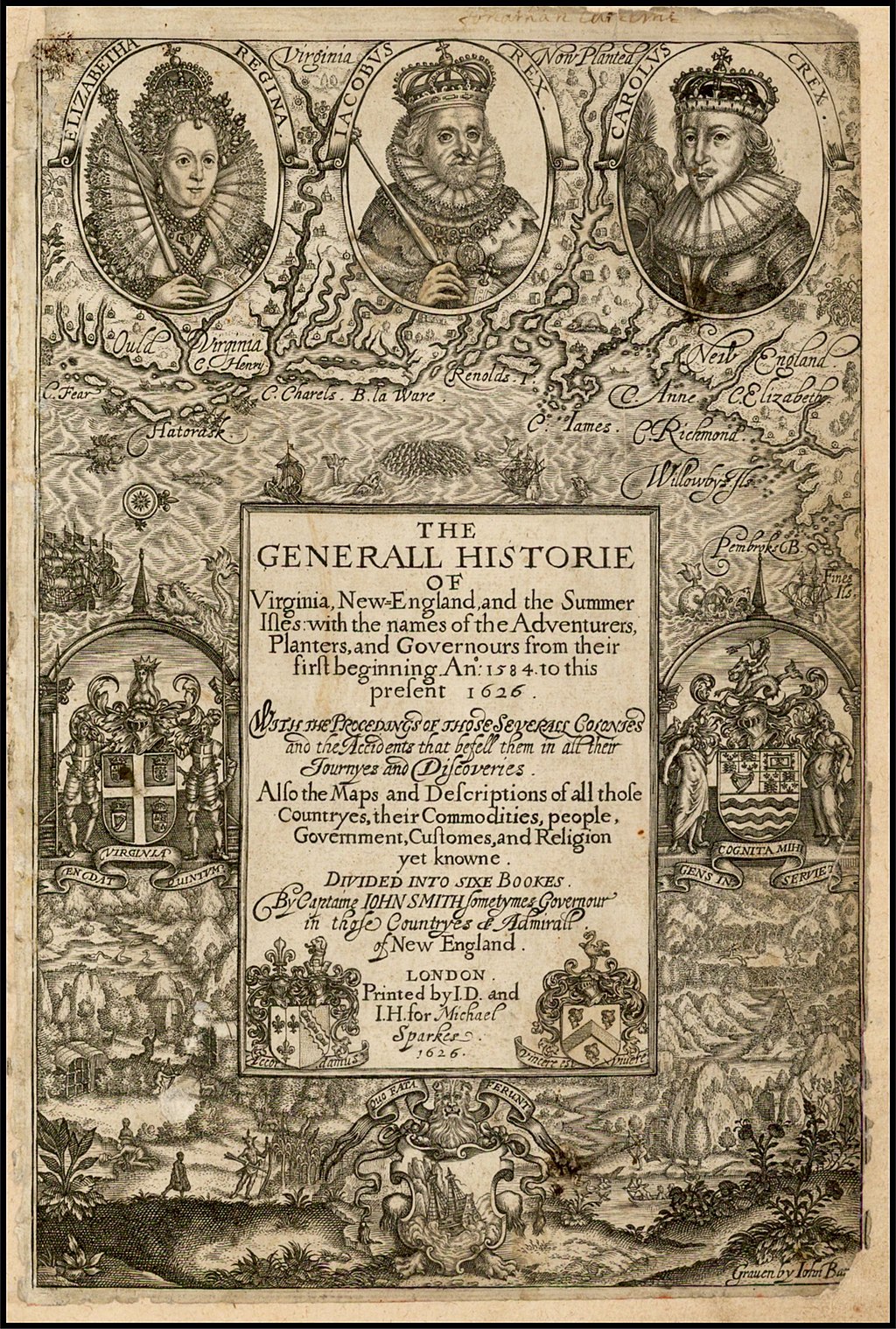
The Generall Historie of Virginia, New-England, and the Summer Isles.
Often abbreviated to The Generall Historie, is a book written by Captain John Smith, first published in 1624. It mentions “many” of this family with different spellings.
First Baileys in America
Among the earliest English settlers — Arriving as early as 1587.
Our Ancestors' Locations
The Baileys have been in America for a very long time — among the earliest English settlers on American soil. They established roots throughout the Virginia Colony, owning several tracts of land in Henrico County that they named
"The World's End."
Virginia Colony
- Jamestown
- Henrico County
- Charles City
- Goochland County
- Jordan's Journey
- Bailey's Point
- Bailey's Creek
Key Settlements
- Manakintowne (Huguenot)
- West & Sherley Hundred
- Beggar's Bush
- Farrar's Island
- "The World's End"
The Lost Colony & Jamestown
Roger Bayley appears to have been the first of this family to set foot on American soil. He was with Sir Walter Raleigh's Lost Colony in 1587 — one of the great mysteries of American history.
The next Bailey to arrive was William Bailey, who came to Jamestown with the first supply ship for the settlers there in 1608. Under Captain Francis Nelson, he set sail on the ship 'Phoenix.' Upon arrival, he found himself mingling with Captain John Smith and Pocahontas.
From "The Original Lists of Persons of Quality" by John Camden Hotten
"The Prosperous left England May 1611 for Virginia, a fleet of three ships and three caravels under Sir Thomas Gates. She was accompanied by the Starr with Captain Christopher Newport, now vice Admiral of Virginia and pilot John Clark, and the Elizabeth, three hundred people, supplies, horses, kine, goats, besides 'coneies, pigeons and pullen.'"
"They reached the Canaries in April, the Dominica West Indies May 9, Porto Rico and anchored at Point Comfort at night, May 22, 1611."
"The men were listed as honest, sufficient artificers, carpenters, smiths, coopers, fishermen, tanners, shoemakers, shipwrights, brickmen, gardeners, husbandmen and laboring men of all sorts."
The Prosperous arrived from Virginia November 13, 1611, announcing the arrival of the Spanish ships in Virginia, the “landing of spies.” “Baley, William, 1611 voyage, 41 at muster. Wife Mary was on the George 1617.”
The Muster of 1624
From the Muster of the Inhabitants of West and Sherley Hundred, taken January 22, 1624:
"WILLIAM BALEY aged 41 yeares in the Prosperous in May 1610. MARY his wife aged 24 yeres in the George 1617. THOMAS his Sonn aged 4 years."
Bailey/Bayly/Baley Voyages Timeline
Roger Bayley arrives with Sir Walter Raleigh's Lost Colony
William Bailey arrives at Jamestown aboard the Phoenix
Another William Bayley arrives on the ship Prosperous and is granted a land patent
Capt. Thomas Osborne II arrives — our 9th great-grandfather — and earliest American immigrant in our family tree
Ann Perault Bailey
Our 5th-great-grandmother — Born October 19, 1694 in Henrico, Virginia Colony.
The Bailey-Smith Connection
The Bailey family, of which we descend, is still being researched. I know that Ann Perault Bailey (George’s wife) was the daughter of Henry William Bailey. Ann Perault Bailey was born on October 19, 1694, in the Henrico area of the Virginia Colony and died on June 17, 1768, in Manakintowne. She was of French descent and part of the Huguenot community that settled there.
Ann married George "Burntface" Smith, connecting the Bailey and Smith families. Her lineage traces back through generations of early Virginia settlers:
Bailey Lineage
Our 5th-great-grandmother, married George "Burntface" Smith
Our 6th-great-grandfather,Ann's father, born 1665 in Goochland, Virginia Colony
Our 7th-great-grandfather. Married Jane Perrin - D: 1717
Our 8th-great-grandfather. Married Anne Osborne, connecting to the Osborne family
The Baileys and Osbornes would remain allied families for generations.
Temperance Bailey & Bailey's Creek
A wealthy heiress at age 3 — And her mother's famous court case.
Bailey's Creek
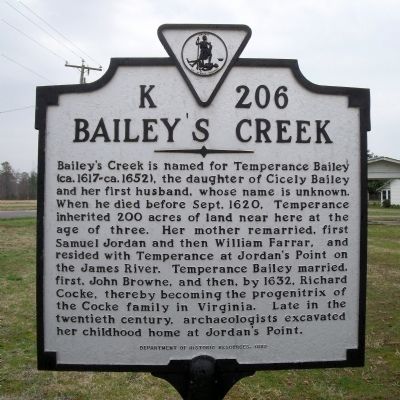
Temperance Bailey was the daughter of Cicely, whose maiden name is unknown (some claim it was Reynolds, but this is unproven). While records are sketchy as to which Bailey was her father, he was most likely Thomas William Bailey or John Bailey, who died in 1620.
Mr. Bailey possibly died of malaria, which was endemic in Jamestown in 1619, making Cicely a widow and leaving his 200 acres to his 3-year-old daughter Temperance — making her a wealthy child.
Historical Note
The Original Southern Belle
Cicely was said to have introduced the art of flirting into Virginia — she was the original southern belle — and undoubtedly enchanting and beautiful, for she won the hearts of some of the colony's outstanding citizens. She was married at least three times.
The Jamestown Massacre of 1622
Cicely's second husband was Samuel Jordan, who owned the property next to her daughter's. Samuel and Cicely settled at "Beggar's Bush," later renamed "Jordan's Journey," near the confluence of the Appomattox and James Rivers.
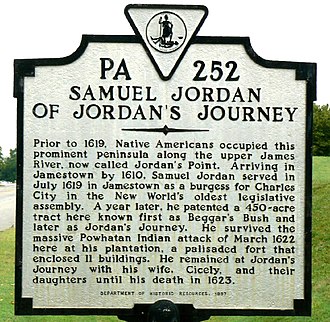
They were living there on March 22, 1622, when the Powhatan Confederacy launched a concerted colony-wide attack to drive the English from Virginia. Thanks to Samuel's foresight in building their home as a fortified, well-defended compound, their family and their neighbors survived what became known as "The Jamestown Indian Massacre."
The Massacre's Toll
Almost 1/3 of the English colonists died that day, but everyone at Beggar's Bush survived. Not long after, Samuel died before February 1623.
America's First Breach of Promise Suit
A legal first in the New World — the famous case of Cicely Jordan.
The Scandalous Affair
Besides having a reputation for beauty, Cicely is famous for another reason: the first breach of promise suit in America.
During the Massacre, William Farrar used a rowboat to flee his nearby home at "Farrar's Island" to Samuel's fortified house. William was trained for the law in England and was Samuel Jordan's estate executor.
From "An American Quilt"
"The Reverend Grivell Pooley conducted Samuel's funeral. Samuel Jordan had been in his grave only a day when Pooley sent Capt. Isaac Madison to plead his suit for Cicely's hand in marriage."
"Cicely replied that she would take Pooley as soon as any other man, but since she was pregnant, she would not engage herself 'until she delivered Samuel Jordan's baby.'"
The Forced "Ceremony"
But the amorous Reverend would not wait. He came a few days later with Capt. Madison, telling her "he should contract himself to her" and spoke the marriage vows. Then, holding her by the hand, spoke her vows for her:
"I, Sysley, take thee Grivell, to my wedded husband, to have and to hold till death us depart."
The witnesses later testified they never heard her say "I do" and that Cicely had begged Pooley not to tell anybody. But he did anyway, and she later remarked, "If Mr. Pooley had not bragged about it he might have fared the better."
The Court Records
From The Records of the Virginia Company of London (vol. 4, p. 218):
"The first motion to him by Mr. Grivell Pooley, touching a match with Mrs. Jordan was about three or four days after the Mr. Jordan’s death, who entreating this examinant to move the matter to her, he answered he was unwilling to meddle in any such business; but being urged by him he did move it."
"Mrs. Jordan replied that she would as willingly have him as any other, but she would not marry any man until she delivered Samuel Jordan's baby. After this Mr. Pooley (having had some private talk with Mrs. Jordan) told this examinant that he had contracted himself unto her, and desired him and his wife to be witnesses of it, whereupon Mr. Pooley desiring a dram of Mrs. Jordan, and she bidding her servant fitch it said he would have it of her fetching or not at all. Then she went into a room, and the examinant and Mr. Pooley went to her, but whether she were privy to his intent this examinant knoweth not; when Mr. Pooley was come of her, he told her he would contract himself unto her and spake these words."
"I Grivell Pooley take thee Sysley to my wedded wife, to have and to hold till death us depart and there to I plight thee my troth. Then (holding her by the hand) he spake these words, I Sysley take thee Grivell to my wedded husband, to have and to hold till death us depart; but this examinant heard not her say any of those words, neither doth he remember that Mr. Pooley asked her whether she did consent to those words or that she did answer ant things which he understood."
"then Mr. Pooley and she drank each to other and he kissed her and spake these words, I am thine and thou art mine till death us separate. Mrs. Jordan then desired that it might not be revealed that she did so soon bestow her love, after her husbands death; whereupon Mr. Pooley promised before God that he would not reveal it, till she thought the time fitting."
"She was not present at the making of the supposed contract. If Mr. Pooley had not revealed it he might have fared better and saith further that her husband told her that night, that Mrs. Jordan had made her self sure to Mr. Pooley, but what words passed her husband did not particularly repeat, but spake of their drinking to the other and of Mr. Pooley saluting her. John Harris sworne and examined saith that he heard Mrs. Jordan say that Mr. Pooley maught thank himself for he might fared the better but for his own words."
Shortly thereafter, it became obvious that Cecily preferred William Farrar and intended to choose him.
The Resolution
When the enraged Rev. Pooley brought suit for breach of promise on June 14, 1623, he accused the lady of jilting him. The Governor and Council could not decide the matter and referred it to the Council for Virginia in London, “desiring the resolution of the civil lawyers thereon and a speedy return thereof.”outside They returned it saying they "knew not how to decide so nice a difference."
The Reverend Samuel Purchase finally persuaded Reverend Pooley to drop the case. On January 3, 1625, Pooley signed an agreement freely acquitting Mrs. Jordan from her promises. Cicely then formally "contracted herself before the Governor and Council to Captain William Farrar."
Legal Legacy
A Law for Virginia Bachelors
The extraordinary incident so stirred the Governor and Council that they issued a solemn proclamation against a woman engaging with more than one man at a time. There is no known record in Virginia that this edict has ever been revoked.
Bailey & Osborne Route to Virginia
The journey from England to their new home in Henrico, 1600s
Map Legend
Key locations in the Bailey and Osborne families' journey to America.
From outside of London - early 1611
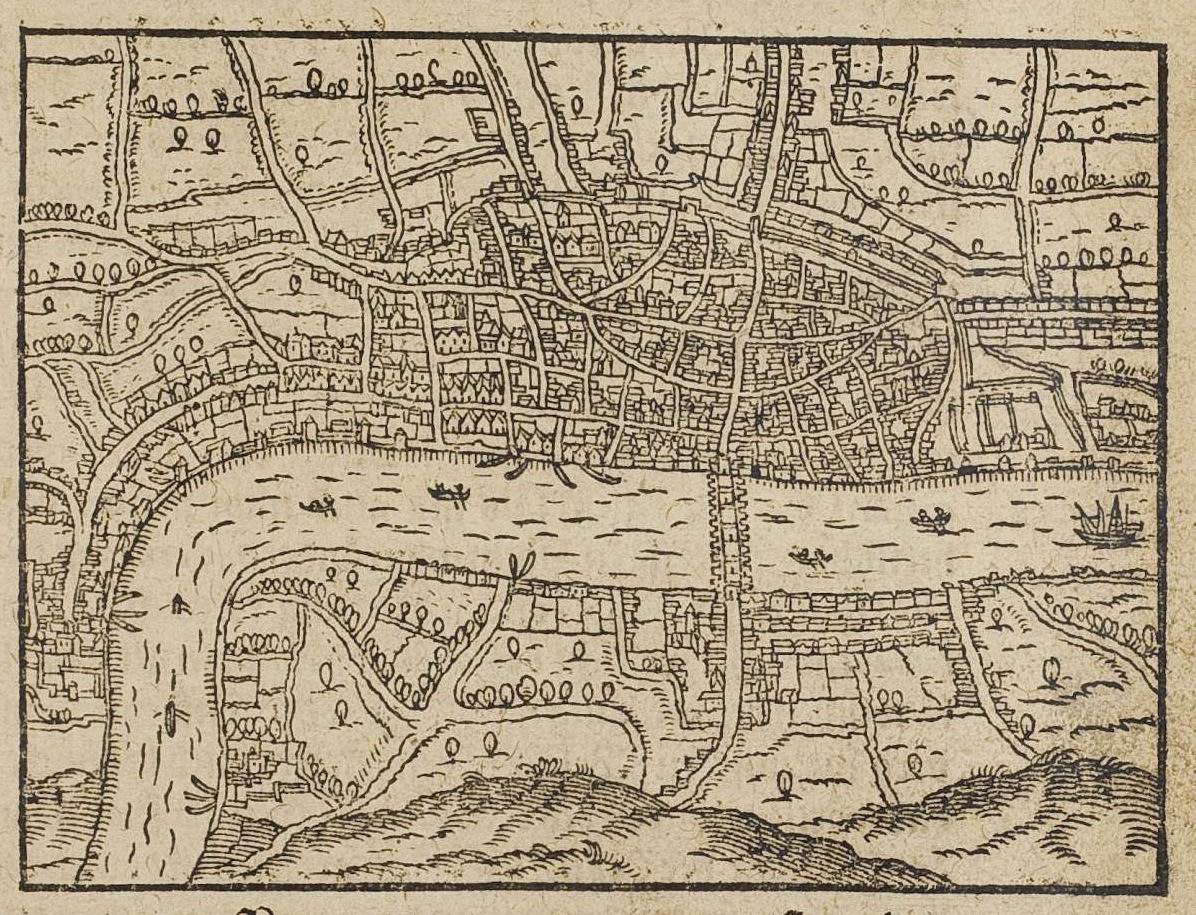
The family lived near Bedfordshire, England. Some 50 miles from London.
Woolwich Dockyard, London - May 1611
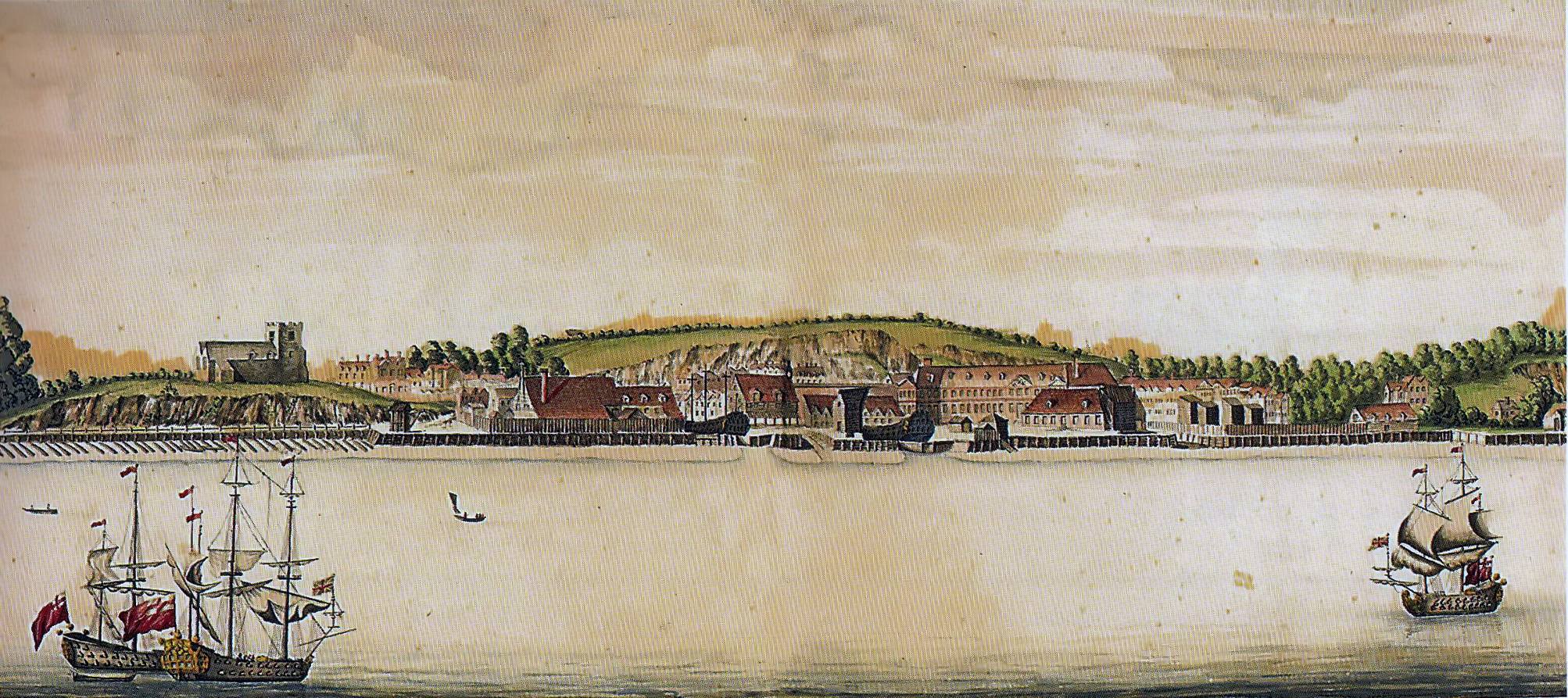
Woolwich Dockyard was founded by King Henry VIII in 1512, and many voyages started here.
Jamestown, Virginia Colony - November 13, 1611
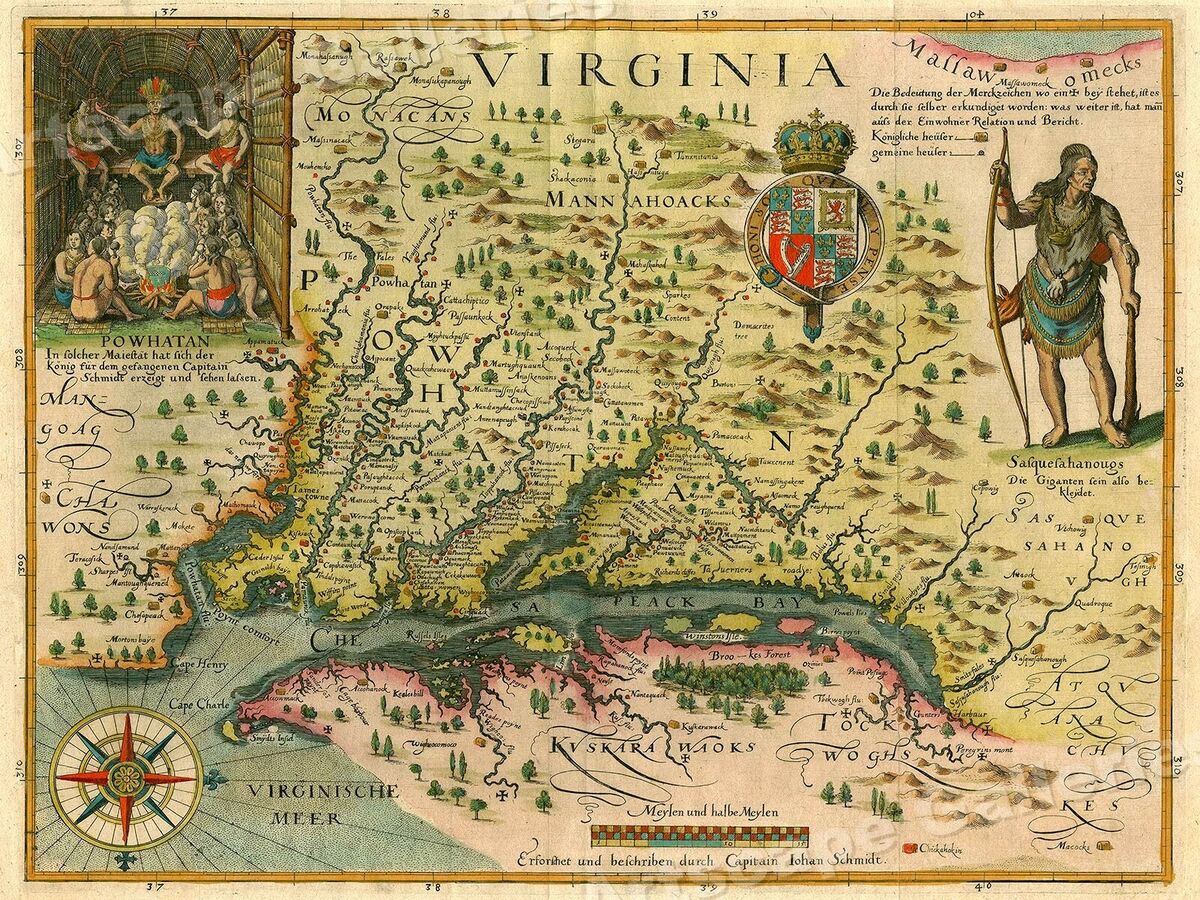
Jamestown was the harbor for early Virginia settlers to disembark.
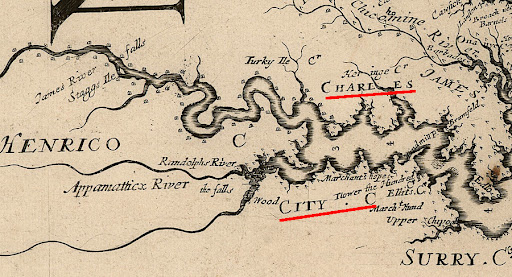
Henrico, Virginia
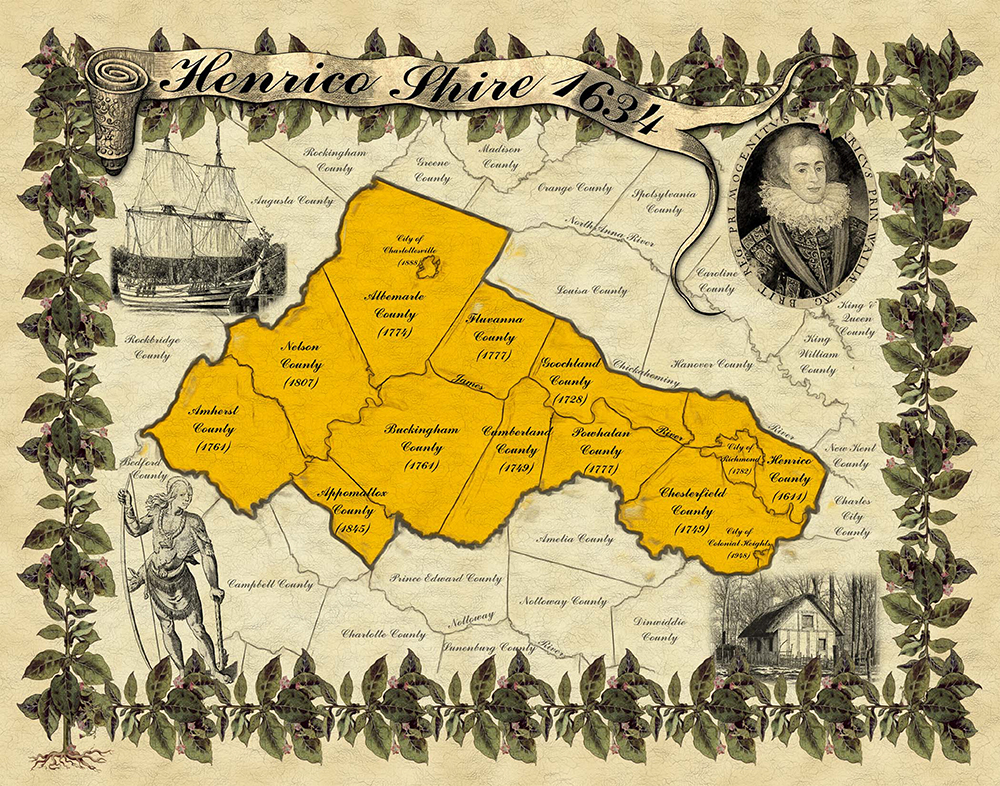
Henrico is another 60+ miles Northwest of Henrico. About 10 miles Northwest of present day Richmond.
Related Resources
Books and sources for further research on the Bailey family
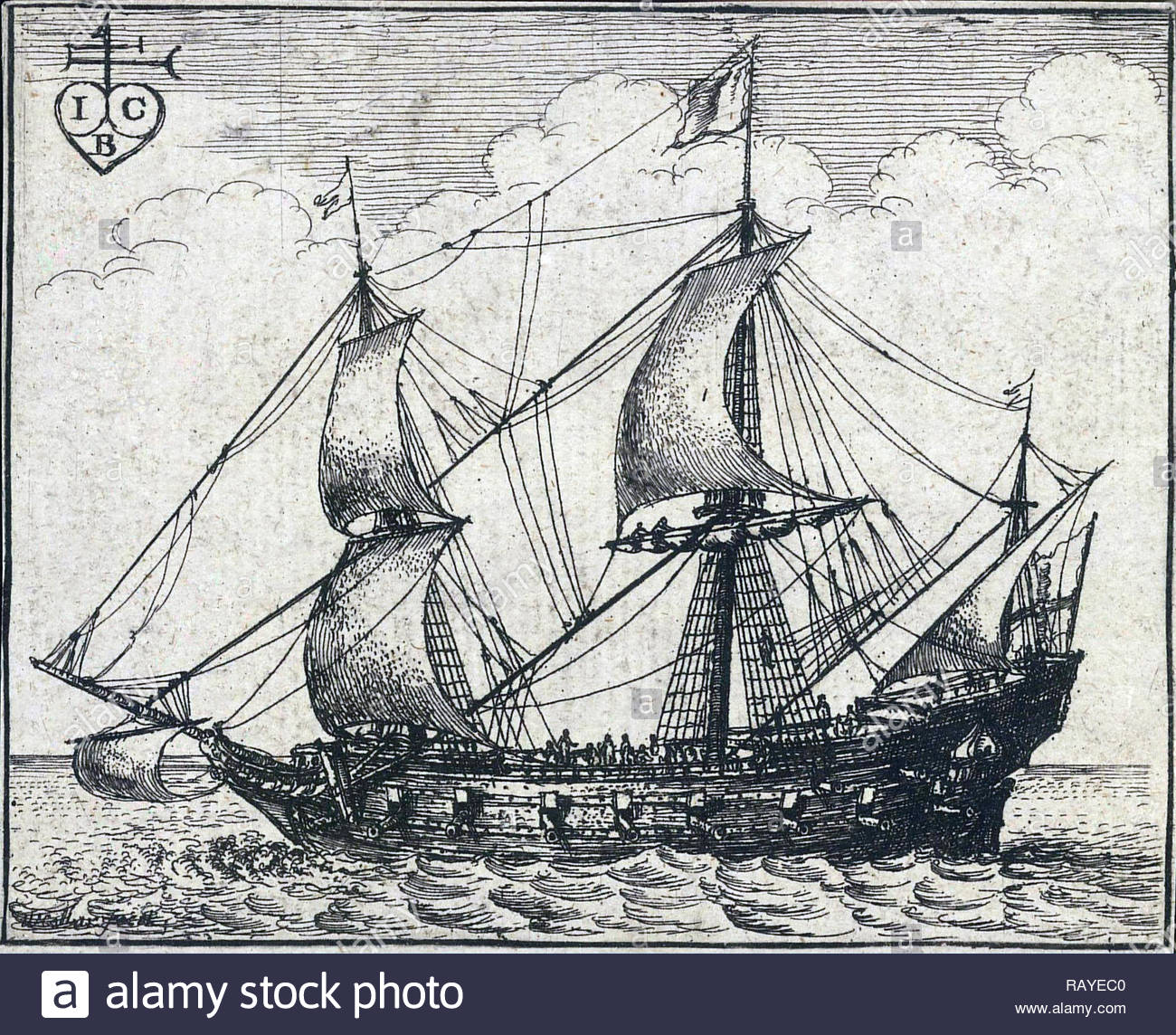
The Prosperous Voyage of 1611
The Prosperous was an English ship that sailed to Virginia in May 1611 as part of a fleet commanded by Sir Thomas Gates to support the Jamestown colony. Departing England in March, it arrived at Point Comfort on May 22, 1611, carrying settlers, supplies, and livestock, subsequently returning to England in November. Key Details of the 1611 Prosperous Voyage: Mission: The ship was part of the "third supply" or a subsequent reinforcing mission to the struggling Virginia colony, bringing necessary workers like blacksmiths, carpenters, and farmers. Voyage Path: The fleet stopped in the Canaries and the West Indies before reaching Virginia. Significance: It was part of the crucial, larger fleet that included the Starr (with Captain Christopher Newport) and Elizabeth that stabilized Jamestown after the "Starving Time". Passenger/Crew Data: The ship carried various settlers, and records indicate it returned to England by November 13, 1611. Detailed records of the voyage that brought William Bayley to Virginia, including passenger lists and historical context.
Explore the original ship records →
The Generall Historie of Virginia
Written by Captain John Smith in 1624, this book mentions "many" of the Bailey family with different spellings: Bailey, Baly, Bayley, Baily, Baylie, Baylye, Baley.
Primary source for early Virginia history →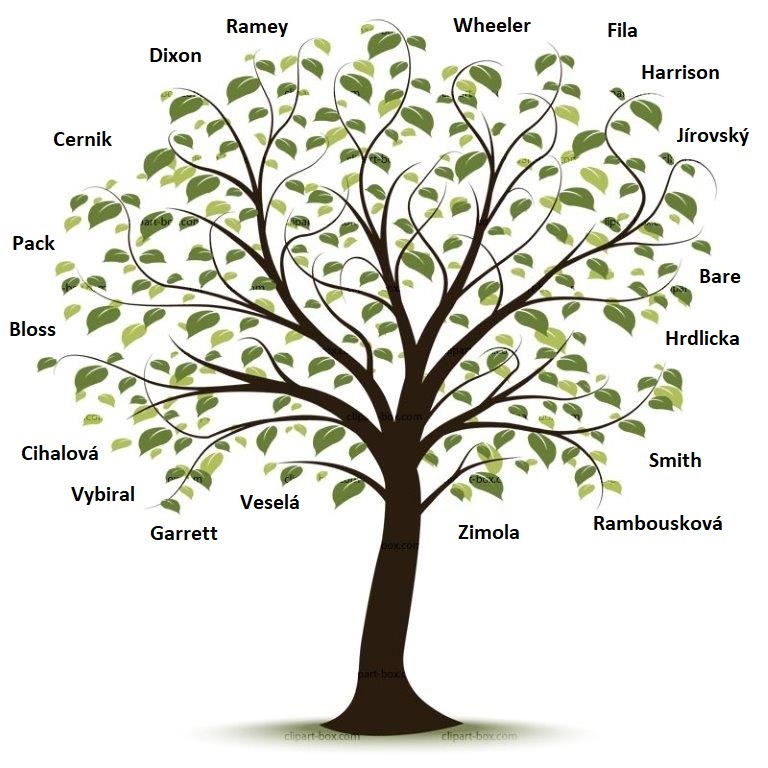
Bailey Family Tree
The ancestor tree connecting the Bailey family to the Smith, Osborne, and other early Virginia families.
Tracing back to the 1580s →
Comments
0 comment(s) on ""