
Photo Collections
Click a category to explore
Černík Farm
0 itemsAfter first settling around Colon, Nebraska, Matěj Černík began buying land near Wahoo, Nebraska. This plot of land, became the homestead to build a house and farm buildings on.
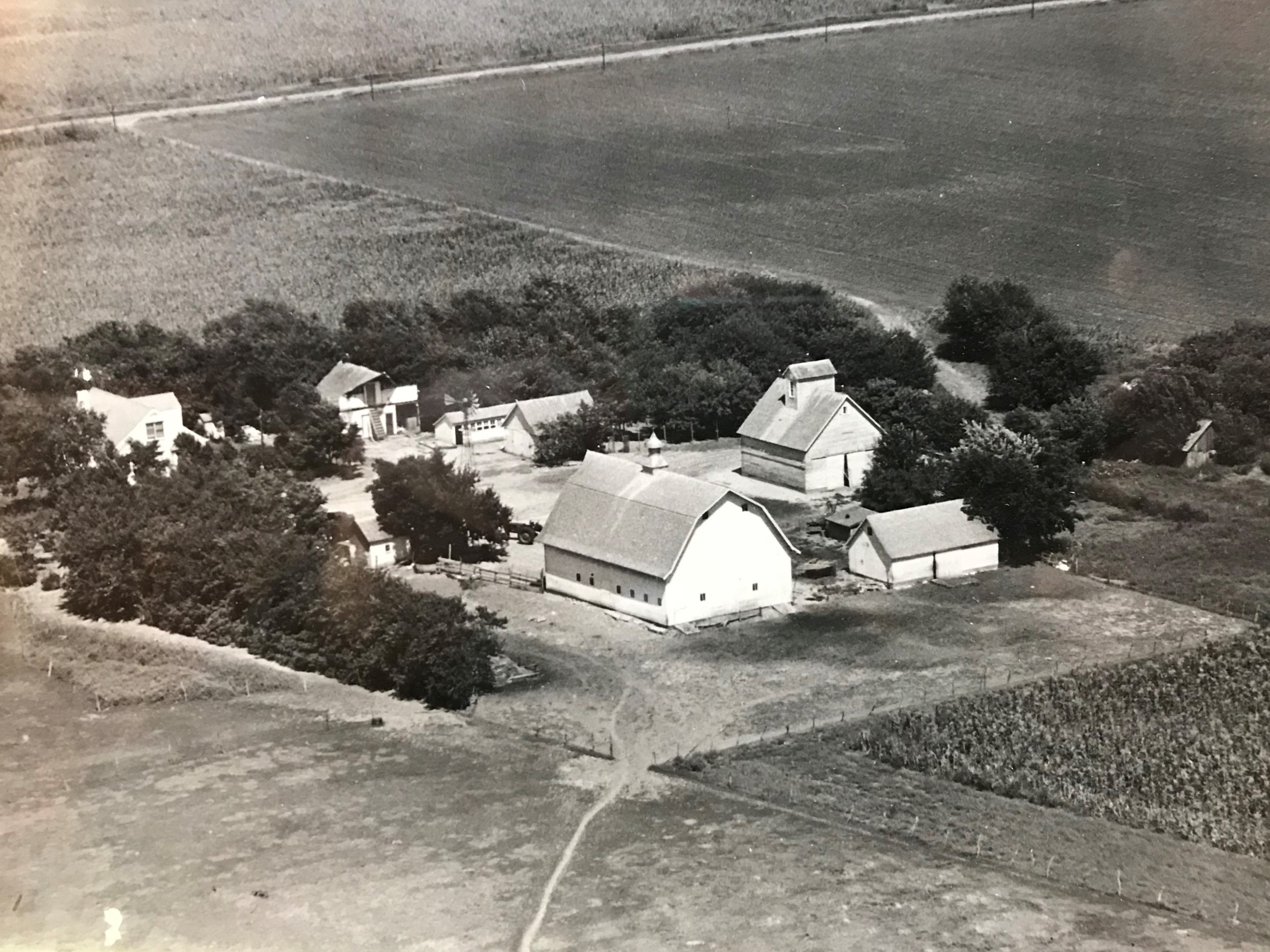
Černík family farm circa 1950s.
Aerial view of Černík homestead.
Černík farm in Wahoo Township Section 5 East 1/2 NW 1/4 and Section 6 North 1/2.
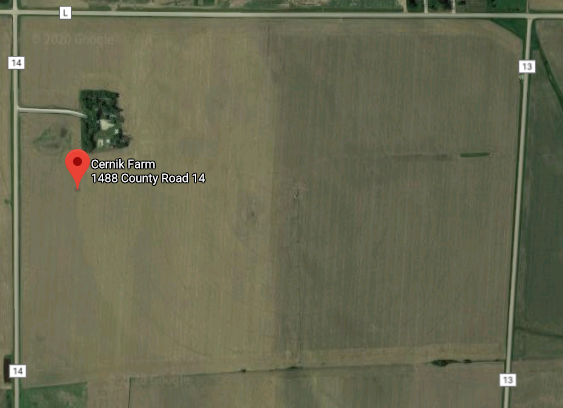
Černík family farm today via google maps, satellite view.
Aerial view of Černík homestead.
Černík farm as a bird would see it.
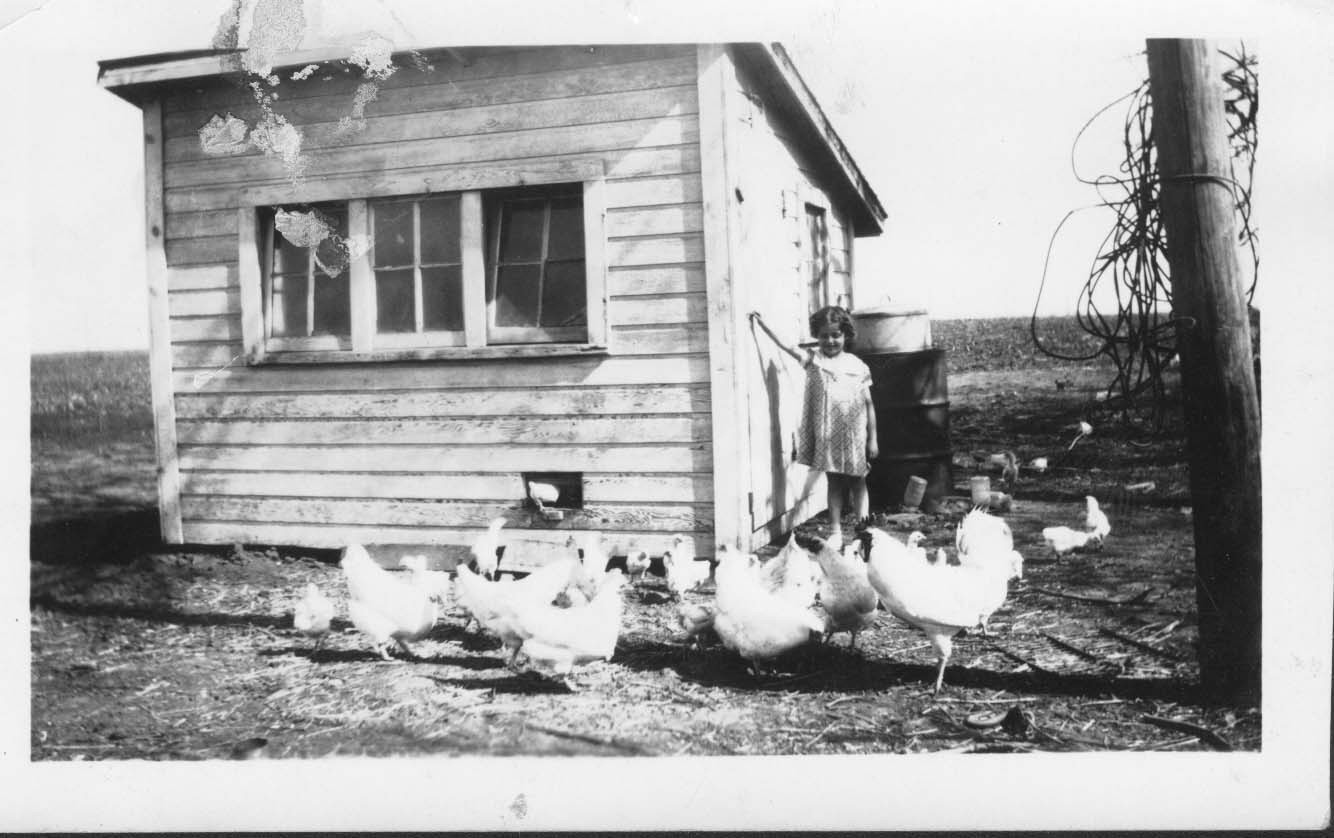
Marie Magdalene Carol Cernik, our mom, circa 1935. This chicken coop was long gone and upgraded to a larger building by the time we were born.
Mom with her chickens.
The original chicken coop.
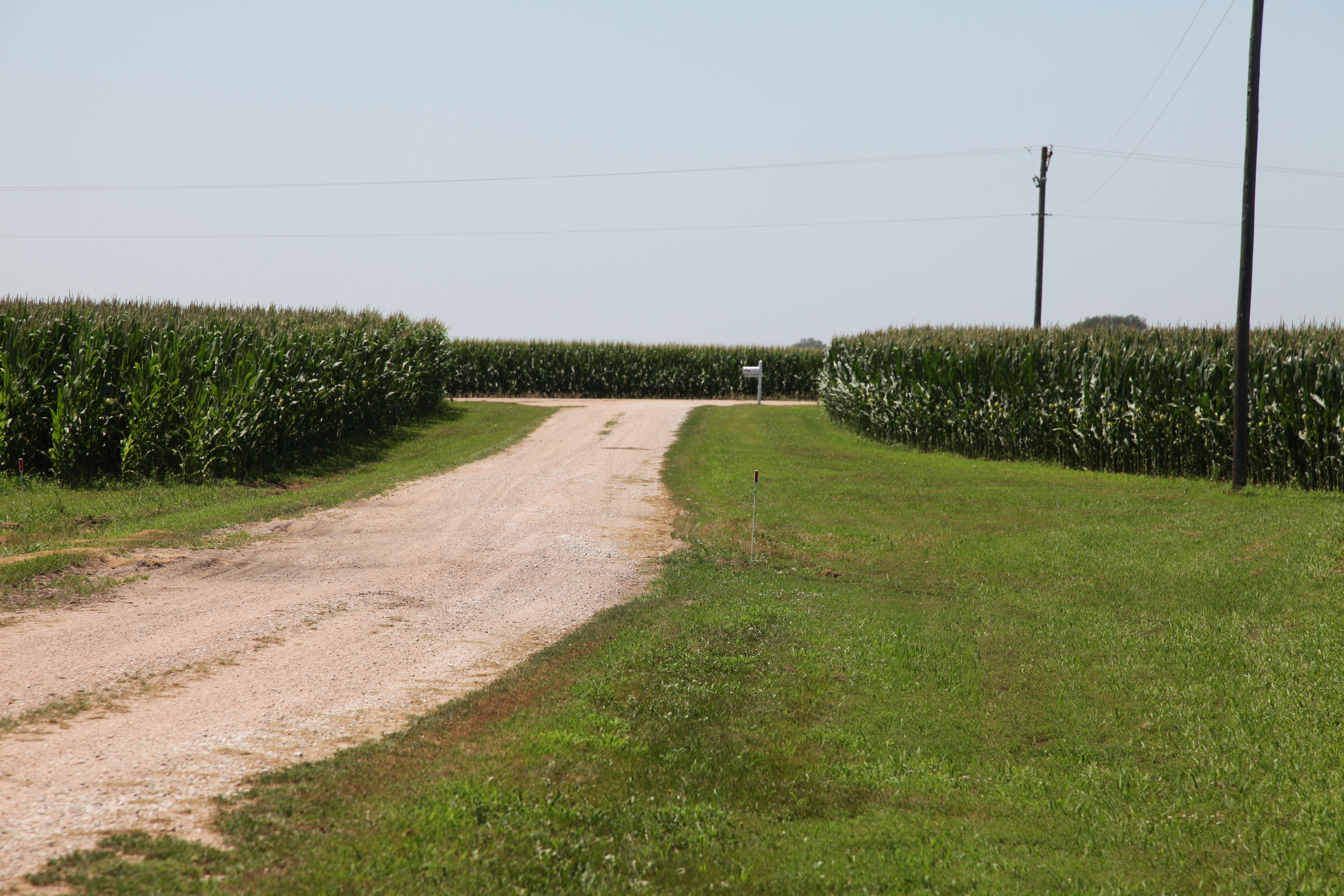
The original farm could only be entered from the county road to the north of the plot of land. Some years later, Frank would purchase the 46 acre plot to the east. He would create the pictured driveway that would now be the USPS official entrance to the farm, leading directly into the main yard and house.
This driveway would have crops on the North side and a good size pasture with a pond on the South side. This pasture was up against to barn for easy access by the livestock. The original entrance, would now be the back entrance.
Front driveway.
Main entrance into the Černík family farm.
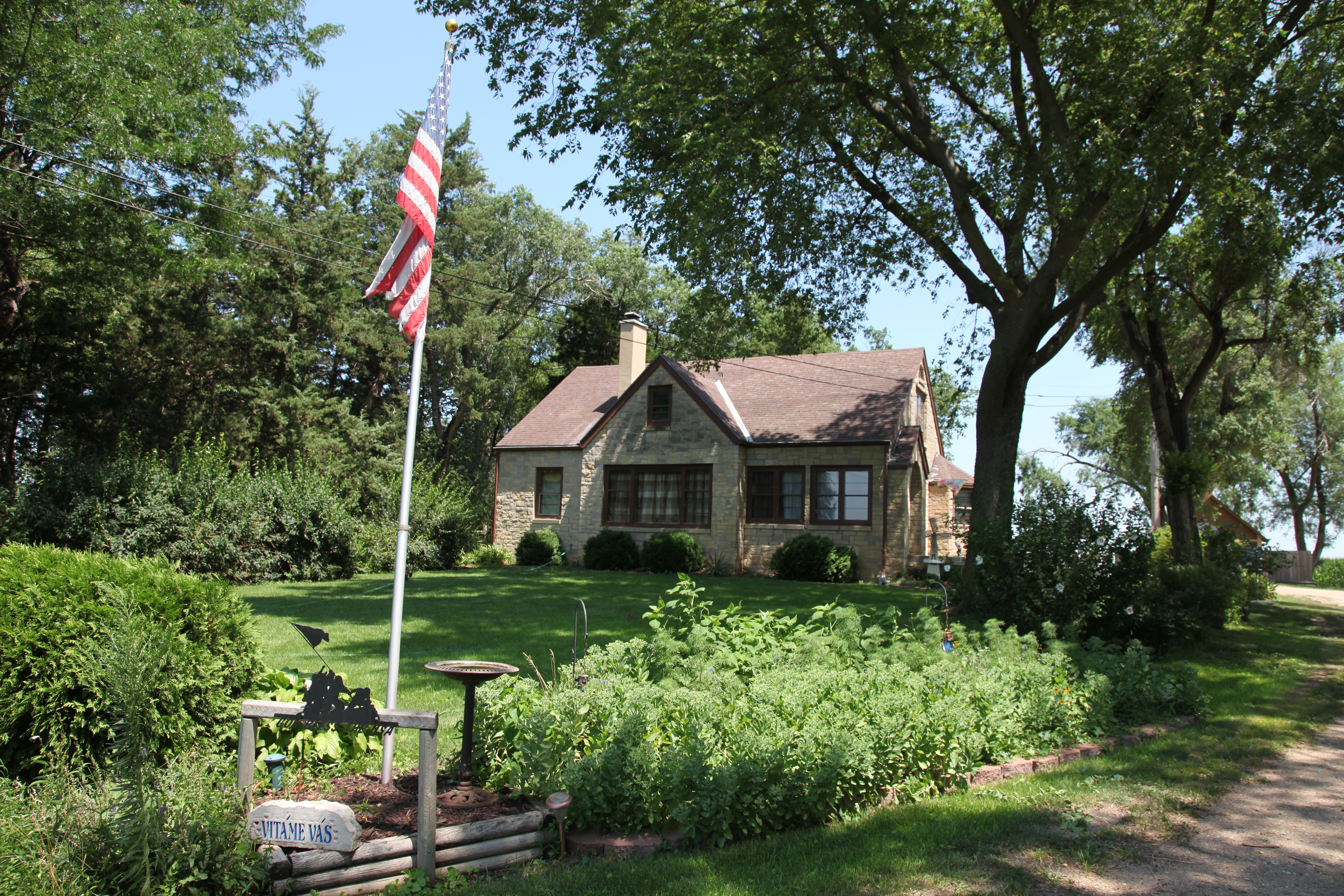
This is the house that Frank built in 1948. Ray and Elaine had already married and moved to their own farm.
The Černík house.
The front as it exists today.
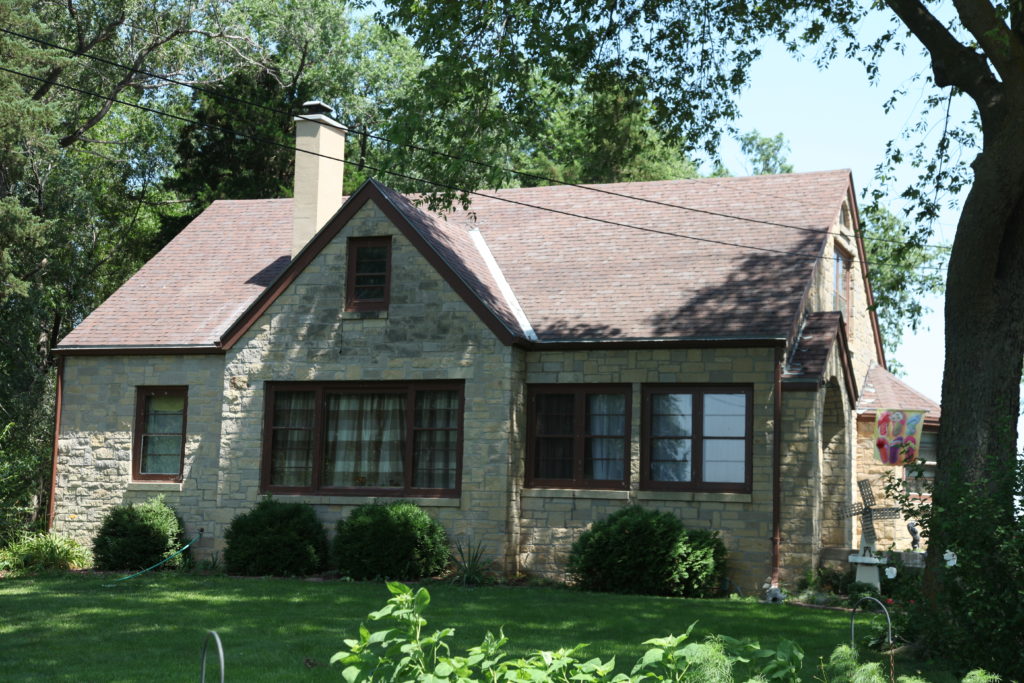
There is a good size grass front yard for building snow forts and water fights — or having your mom hose you down before she let you into the house.
House closeup.
From the front yard.
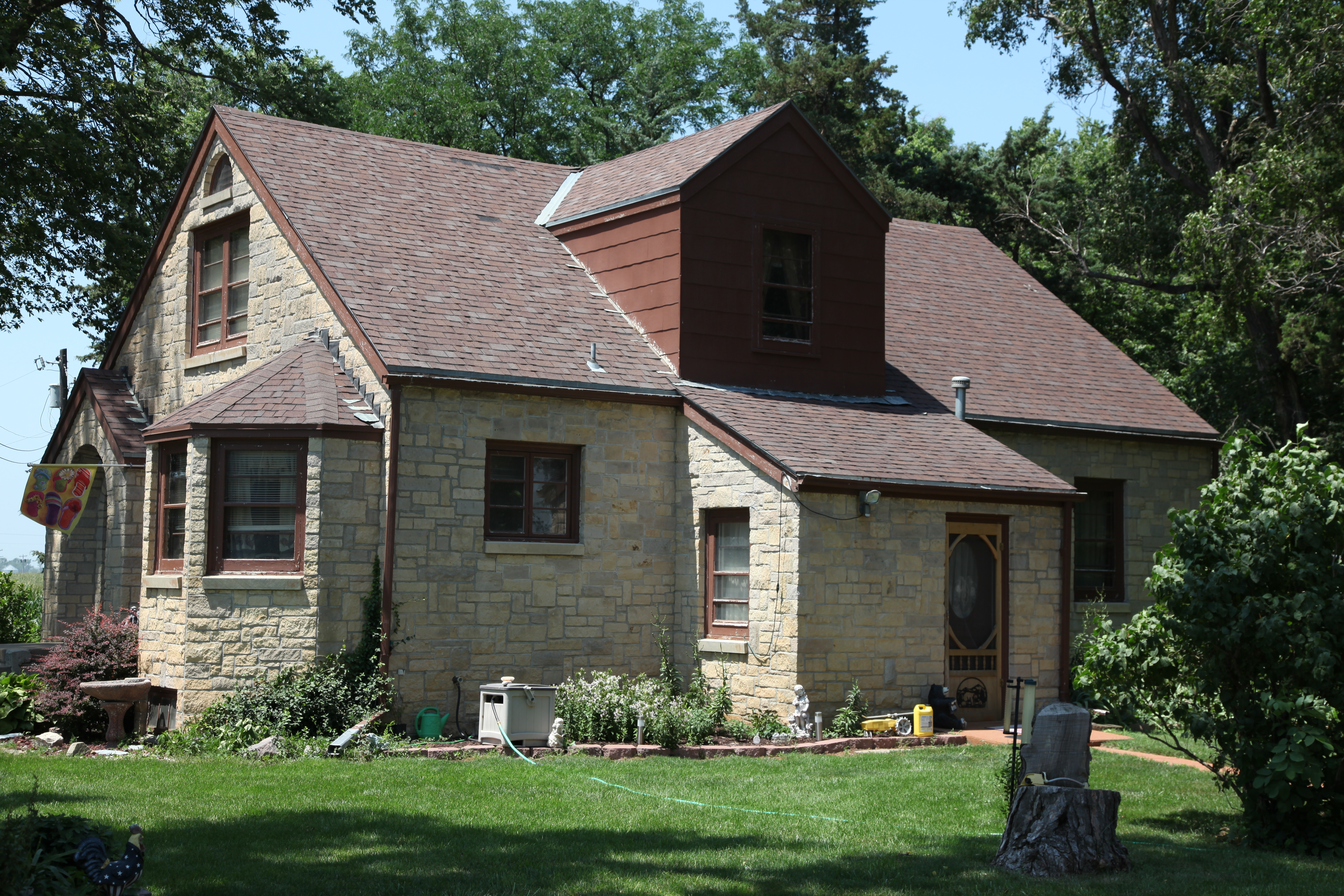
From the back entrance, you could go downstairs into the basement or into the kitchen. Back of the farm house. There used to be more trees around it (see stump).
The back entrance.
View from the garage.
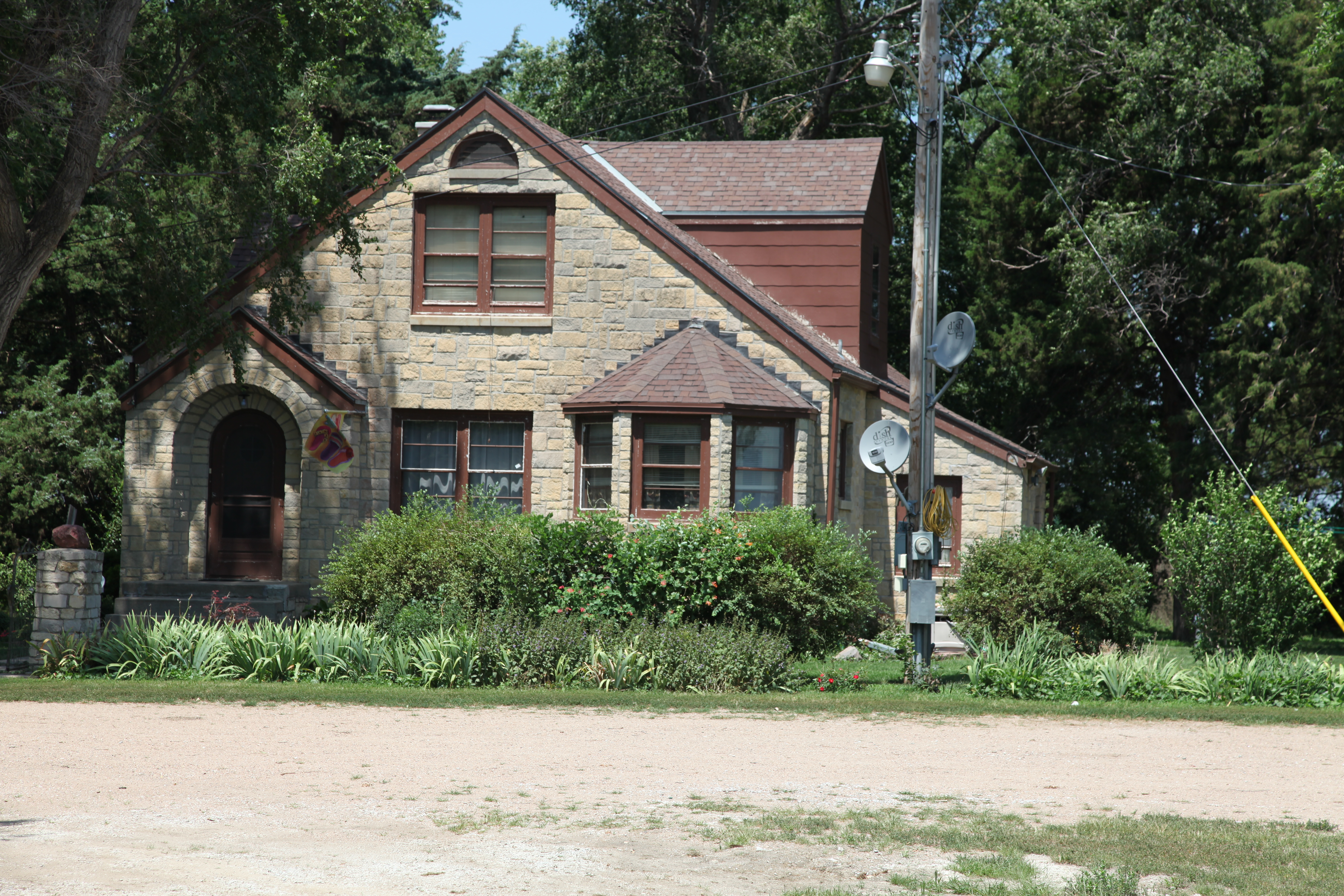
Side of the house from the "farmyard" area. The farmyard was surrounded by buildings and protected by the windbreak. It was a huge area and played many rolls over the years for both kids and adults.
Side view of the house.
Looking from the barn.
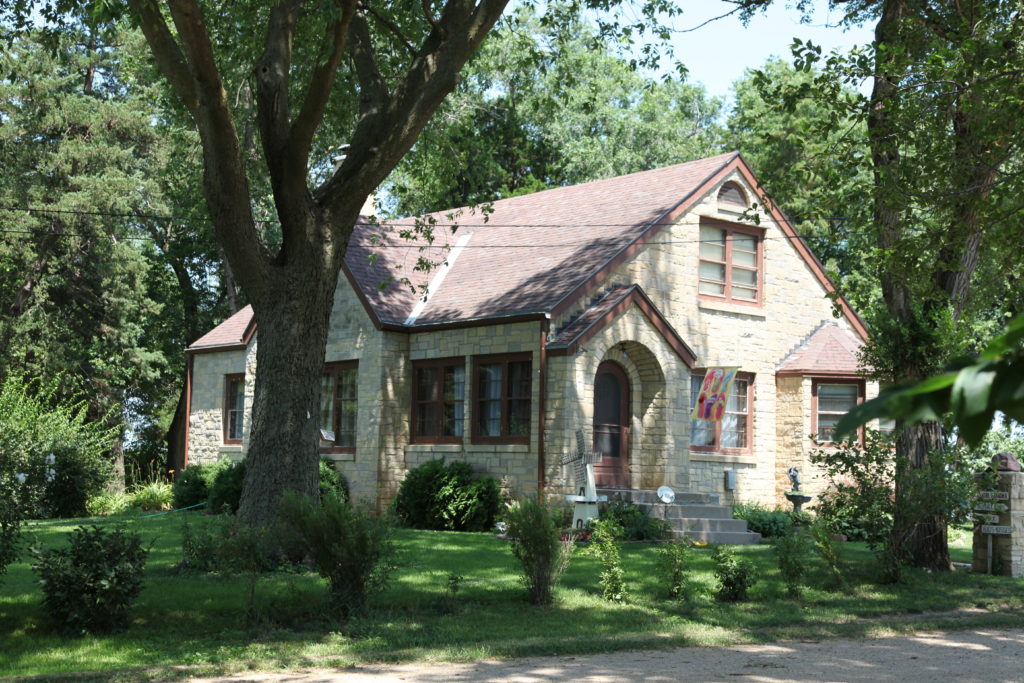
We had a LOT of great times in that house. The upstairs, where we often slept had NO heat. But a BIG bed.
House as you pulled up.
Looking from the entrance into the farmyard.
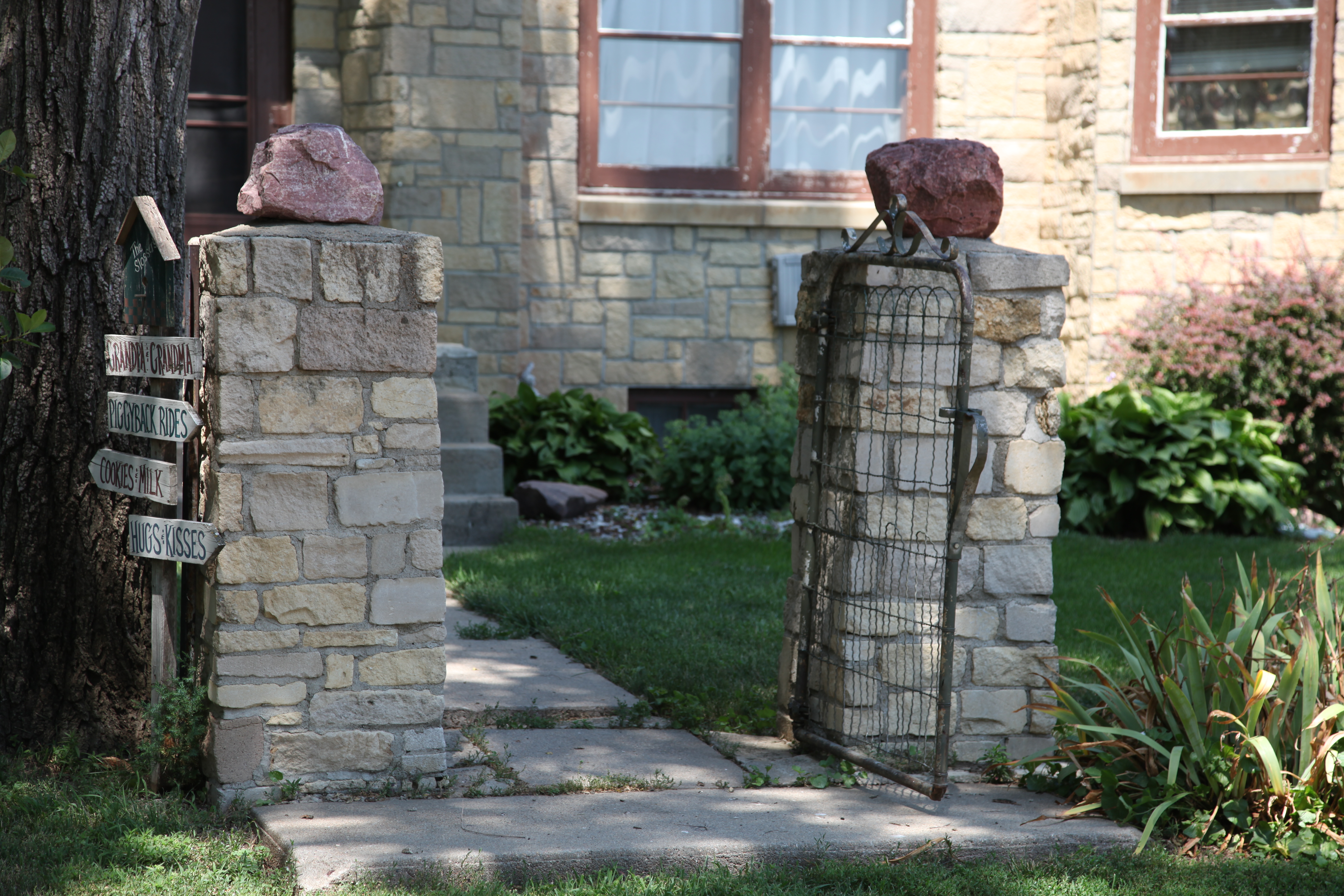
The front entrance from the farmyard has a stone gate and walkway. There were a lot of Christmases where Santa's tracks led to the yard through that gate.
Gate entrance.
Looking from the farmyard.
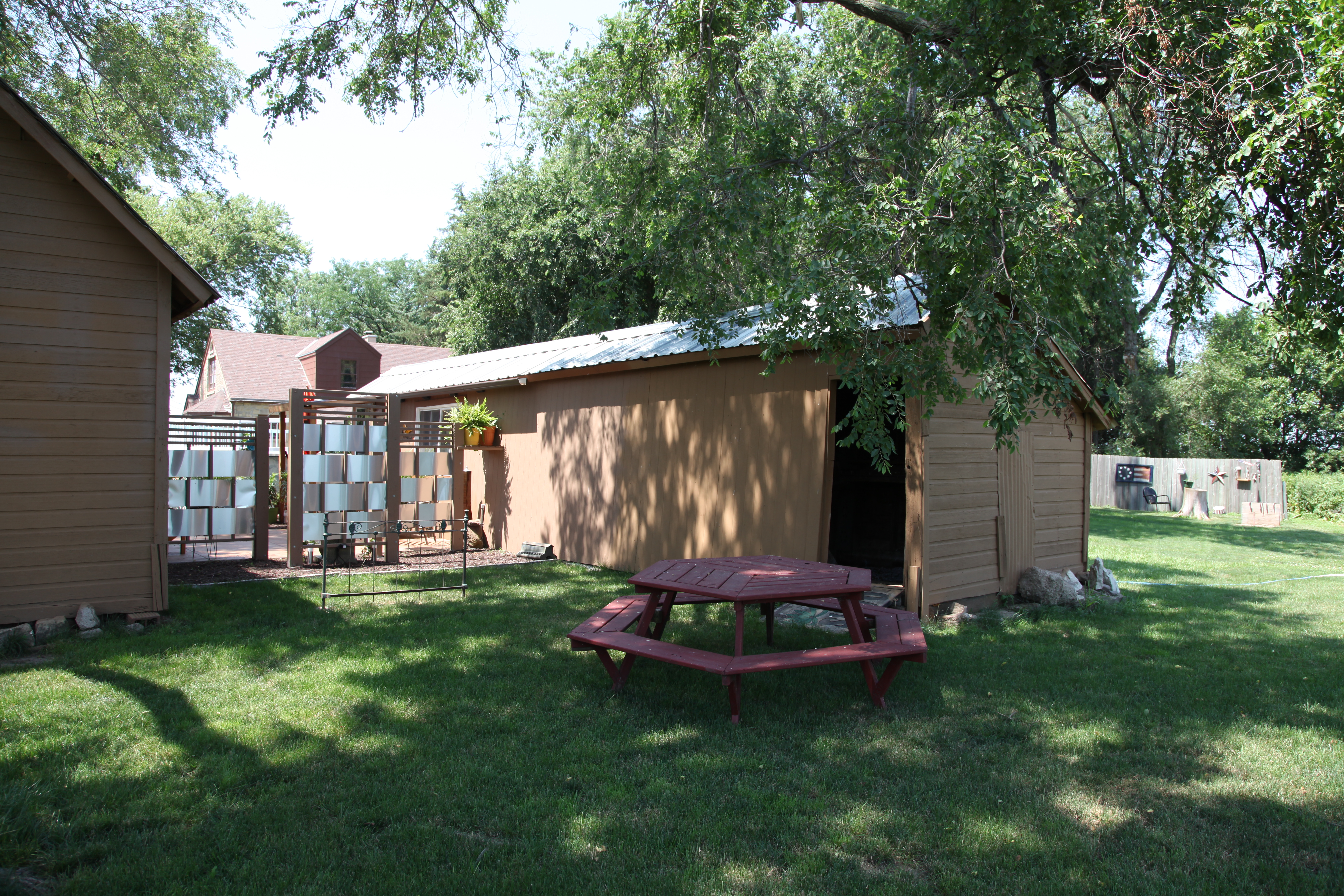
The narrow building on the right was the chicken coop. If you wanted fresh eggs for breakfast, that was the place to go. The partial building on the left is the garage.
Chicken coop and garage.
The play structure was not there until renters put it in.
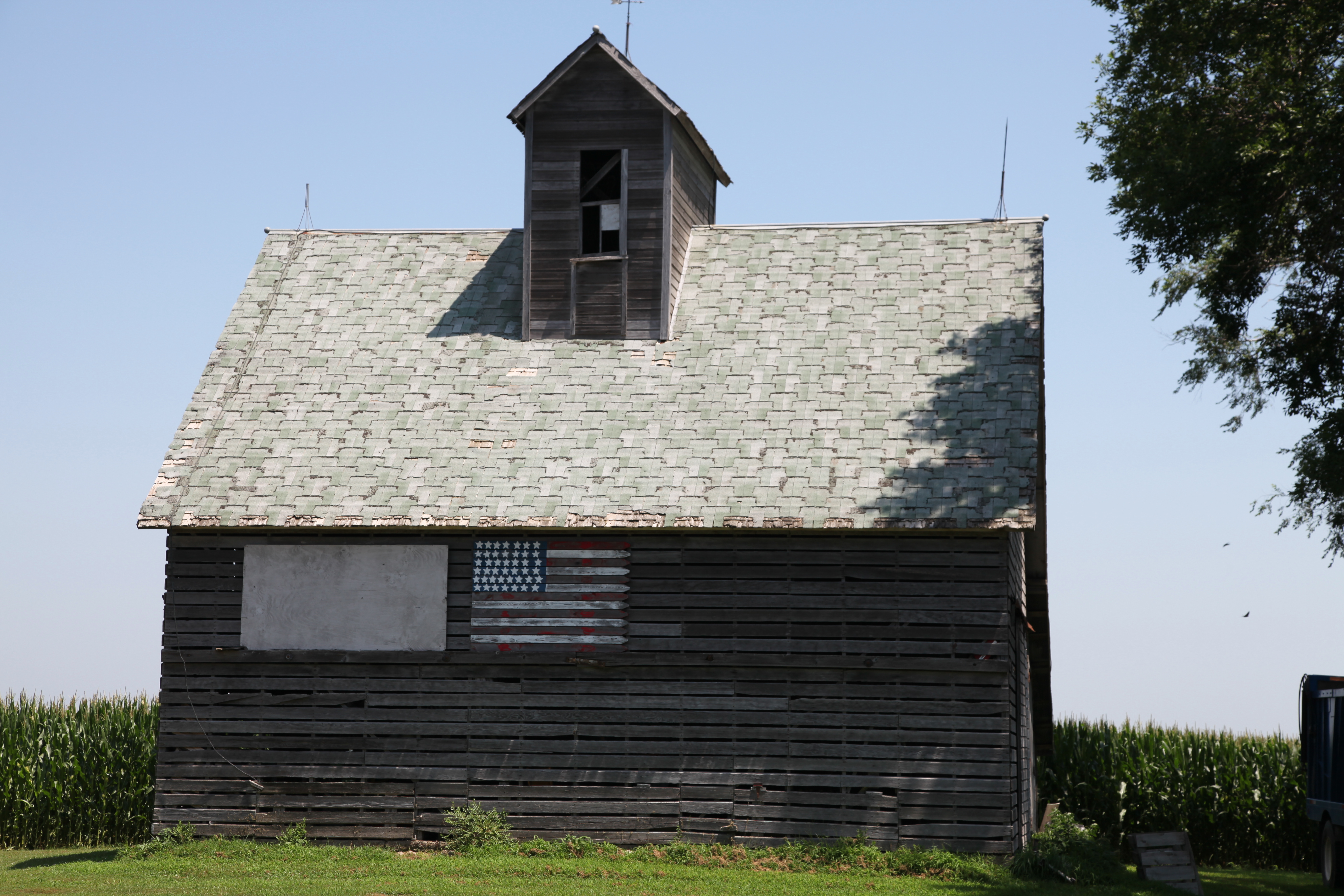
This is the west side of the building that was used to store grain — corn or soybeans. It also had a corn crib for whole corn on the cobs to dry in.
Behind it were other sections for equipment storage. You can see it on the other photos. This is the largest original building left since the barn was sold off.
Corn crib and grain storage.
Equipment storage also.
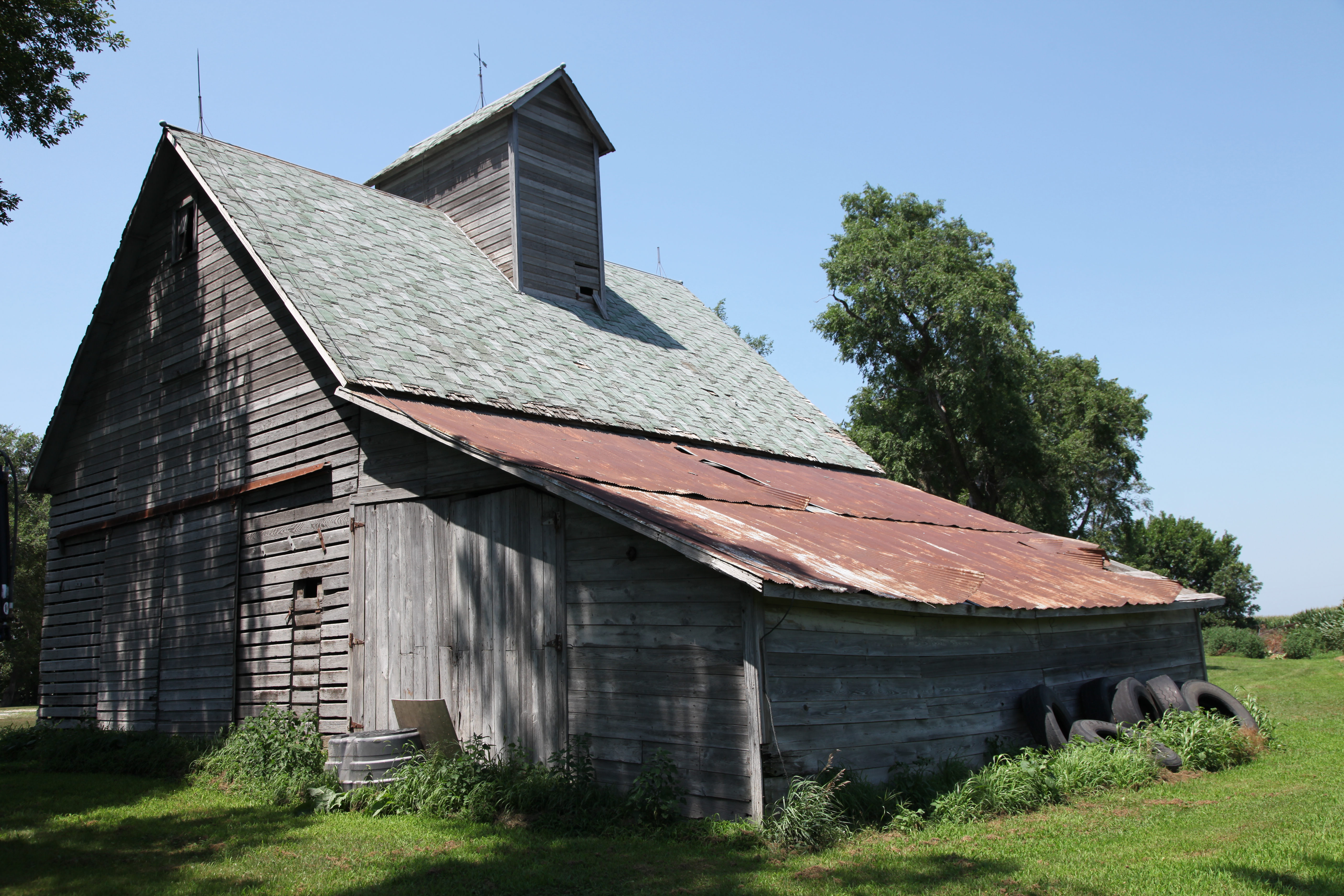
The same building looking from the Southeast. We used to play up in the drying grain. It was like think quick sand. Got a soy bean stuck in my ear. Thanks bro!!
Equipment and tractor storage.
Corn could be de-shelled in here.
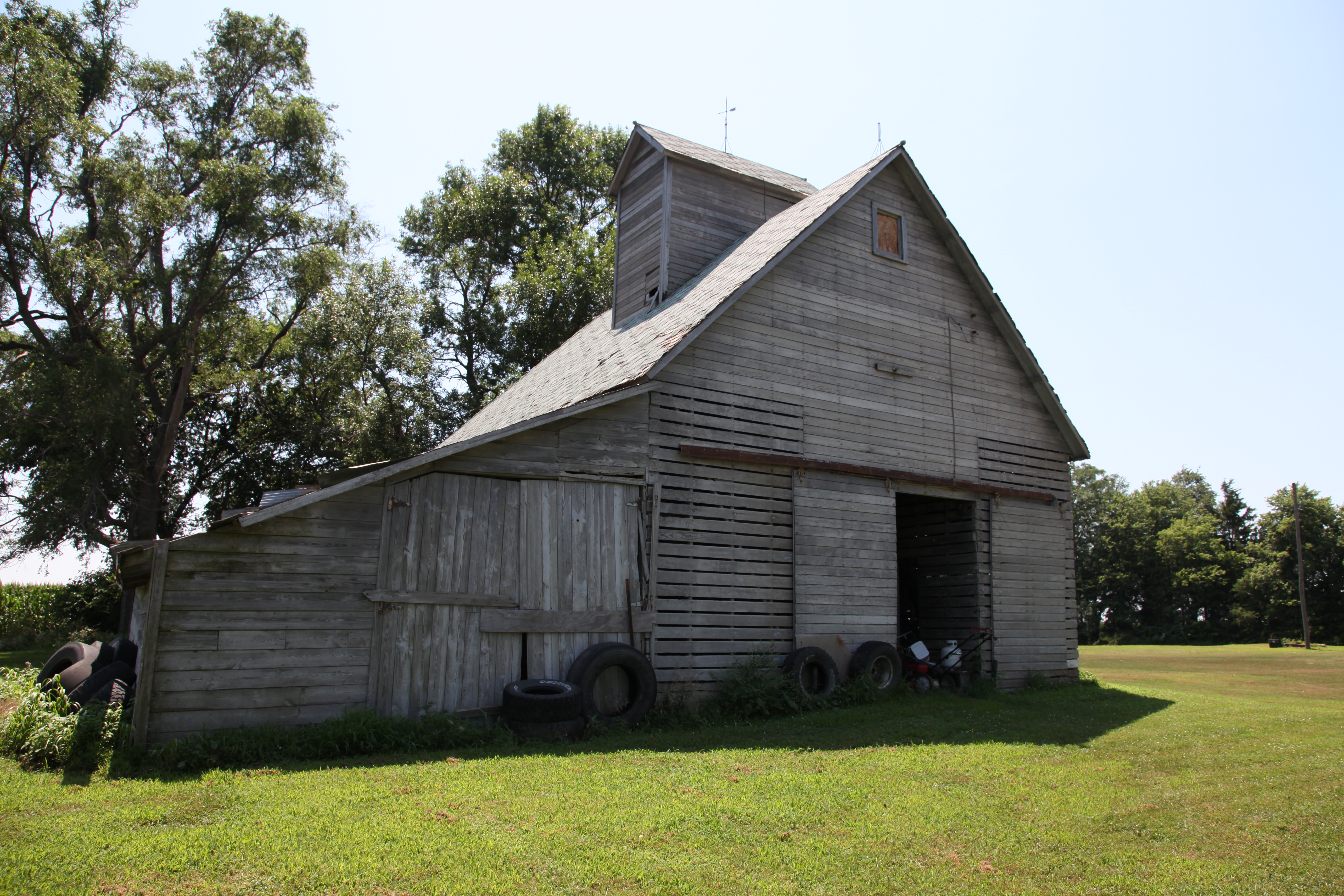
The same building looking from the North. Grain carrying trucks would enter here to pick up a load of grain that had been drying on the second floor via a grain chute.
Sliding barn doors.
Grain truck entrance.
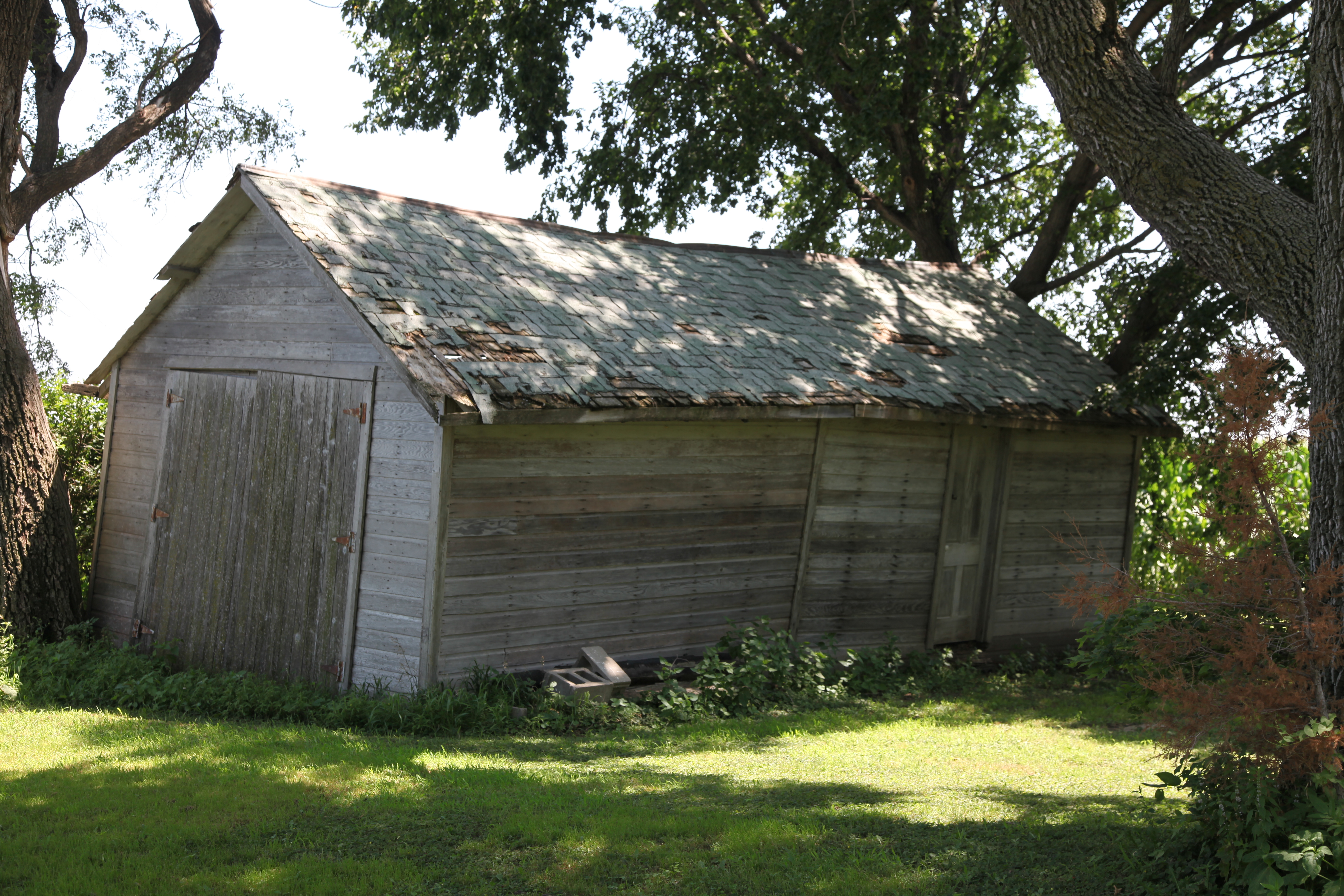
An additional storage shed. Dave stored his car, a Chevrolet Chevelle in that shed when he went to Navy Boot-camp.
Car-sized storage shed.
A 55 gallon tank storing diesel was next to it.
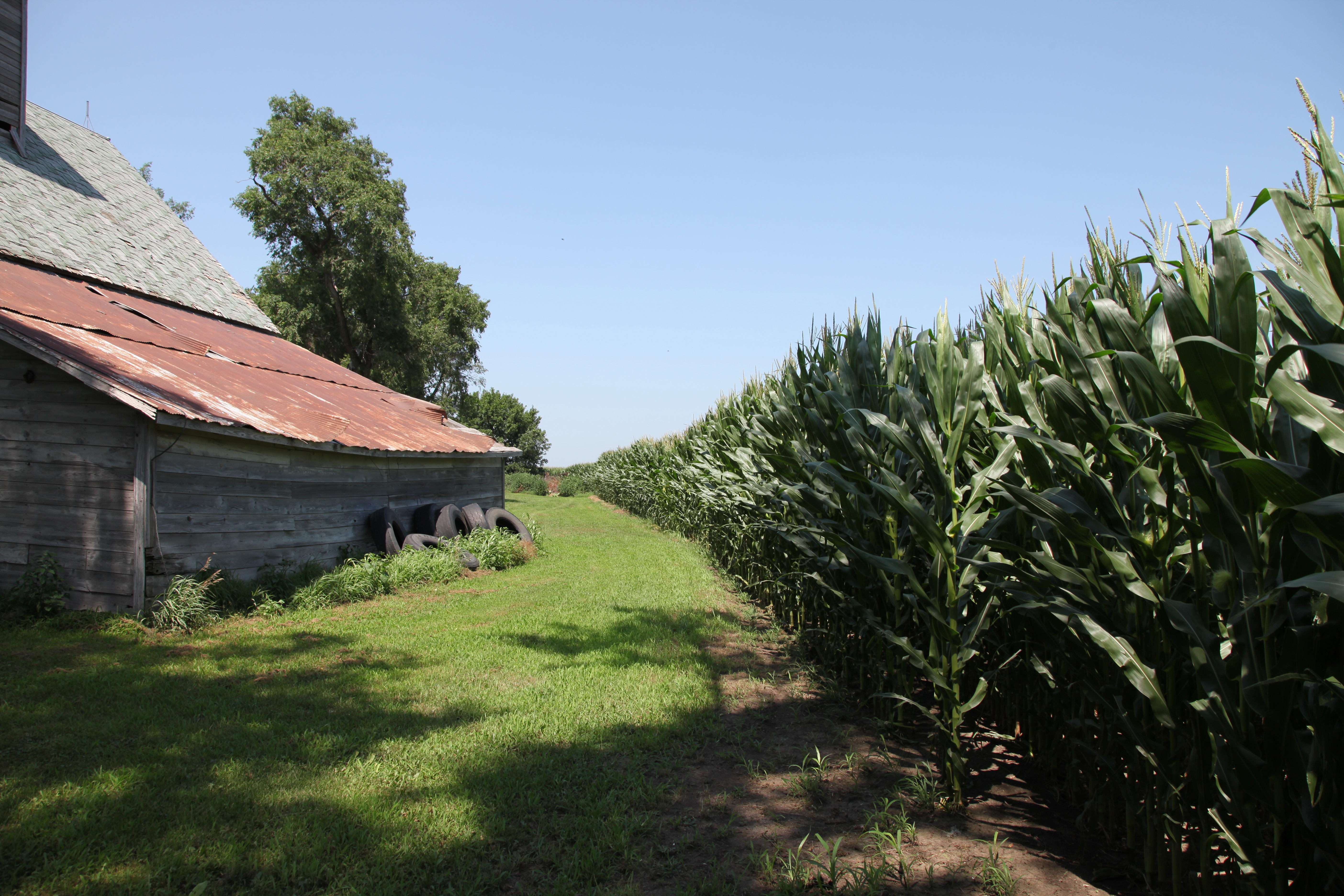
There used to be a lot more space and windbreak by the building. One of the trees was a large mulberry tree. Where the corn is now right up against it, the back road once existed.
Field corn.
Tightly packed up against the remaining buildings.
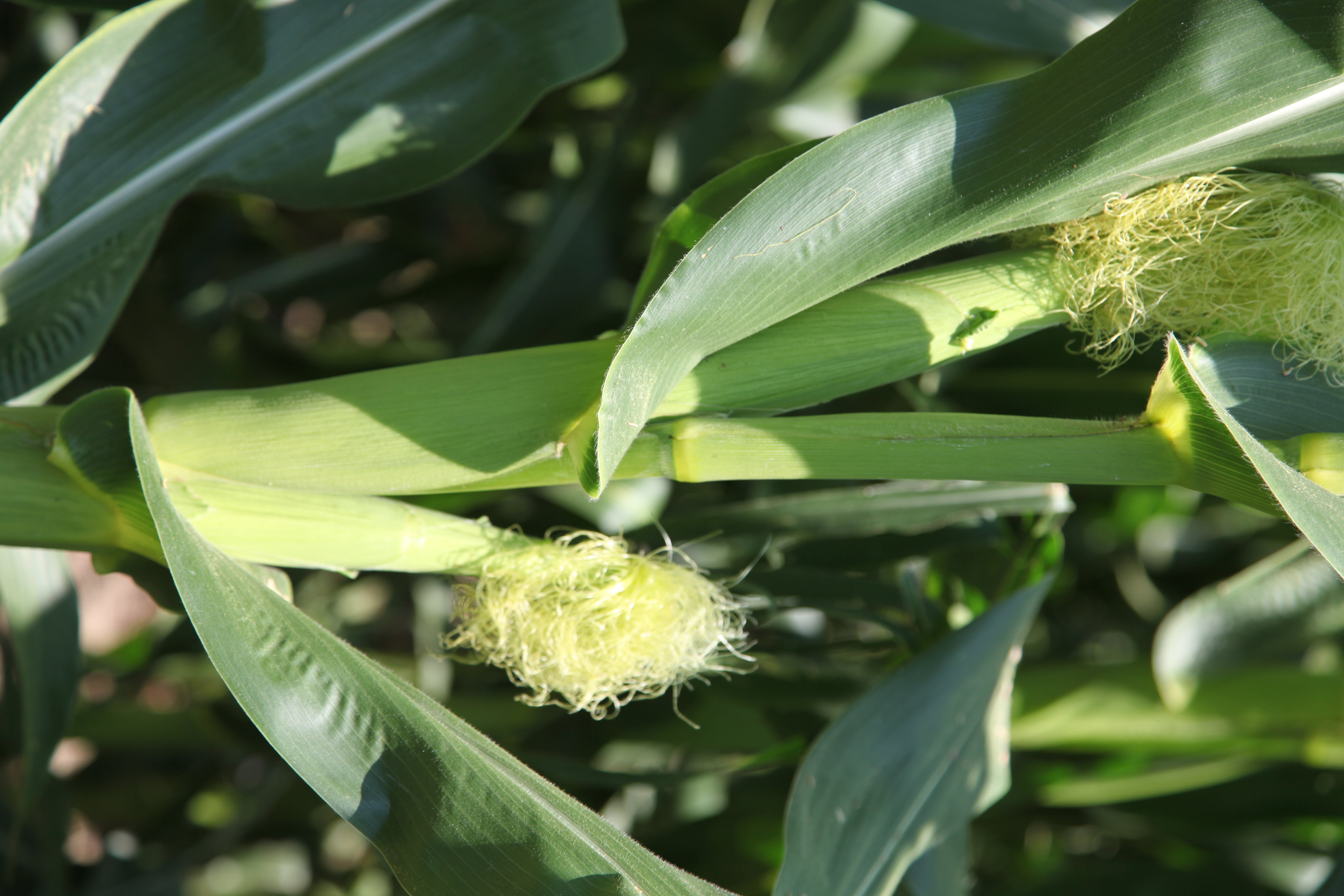
Field corn — used for livestock feed — as opposed to "sweet" corn, which is what you eat on a cob or out of a can or frozen bag.
Field corn closeup.
Still needs time to fill out this ears.
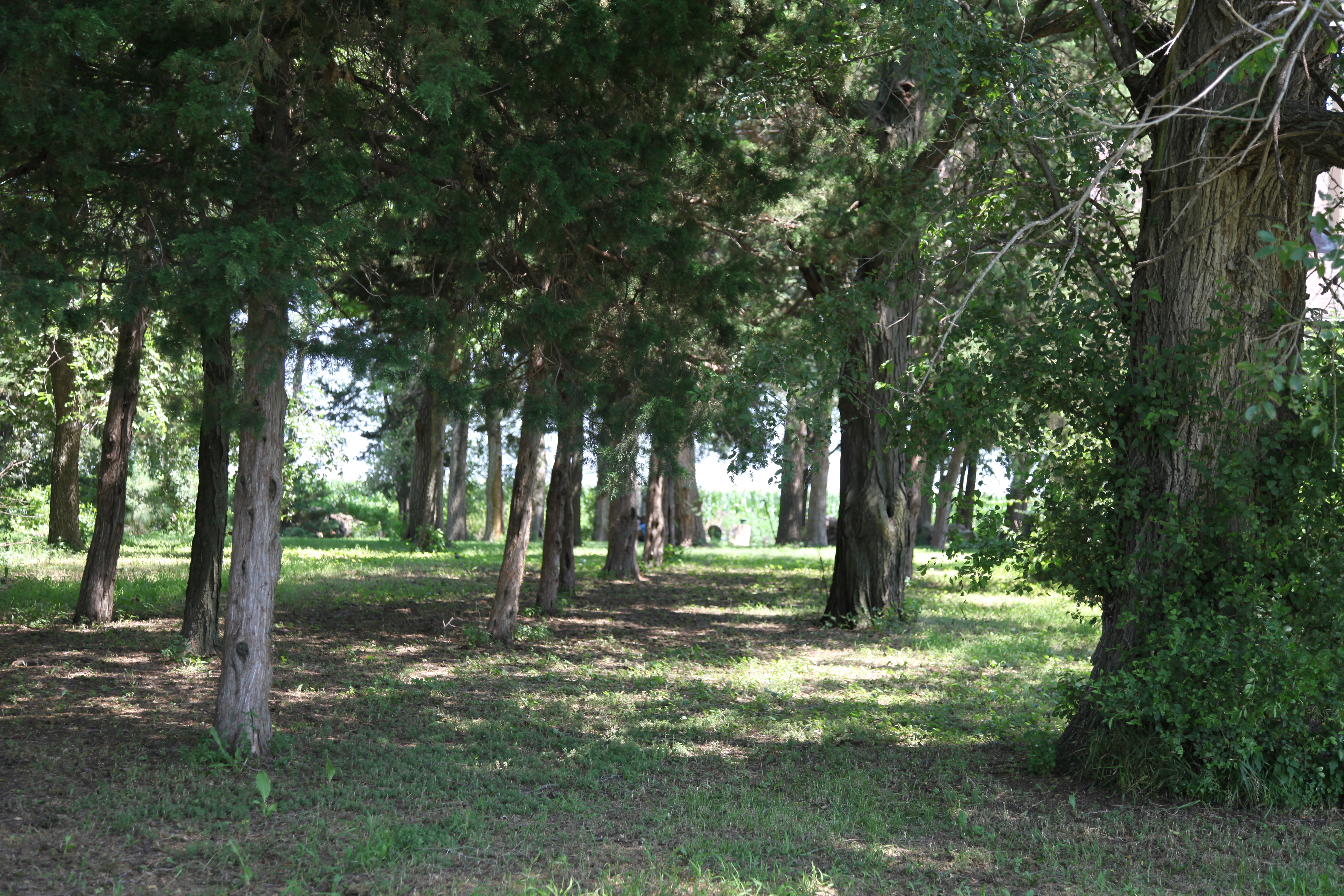
A good portion of the windbreak, extremely important in the Midwest, still exists today.
Windbreak.
These trees are at the entrance to the farmyard on the South side.
Wahoo Barn
0 itemsThe barn was by far the largest building on the farm. There is a concrete stoop on the south side that has the date 10/12/21 engraved in it, so apparently that is when the concrete work was completed years ago in 1921.
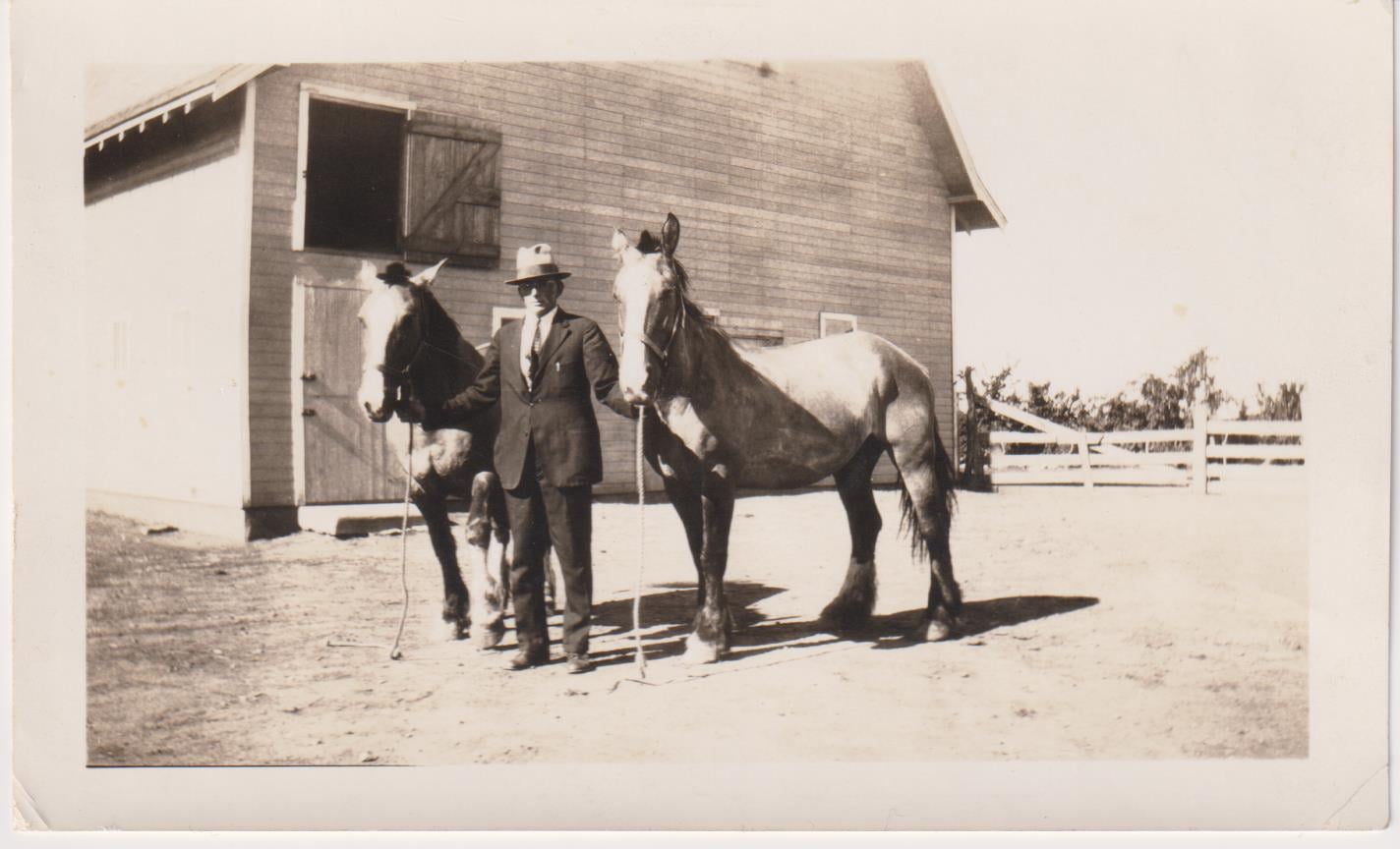
This photo was taken from the coral area facing the back of the barn.
Frank with horses on farm.
Frank with horses Nellie and Nancy.
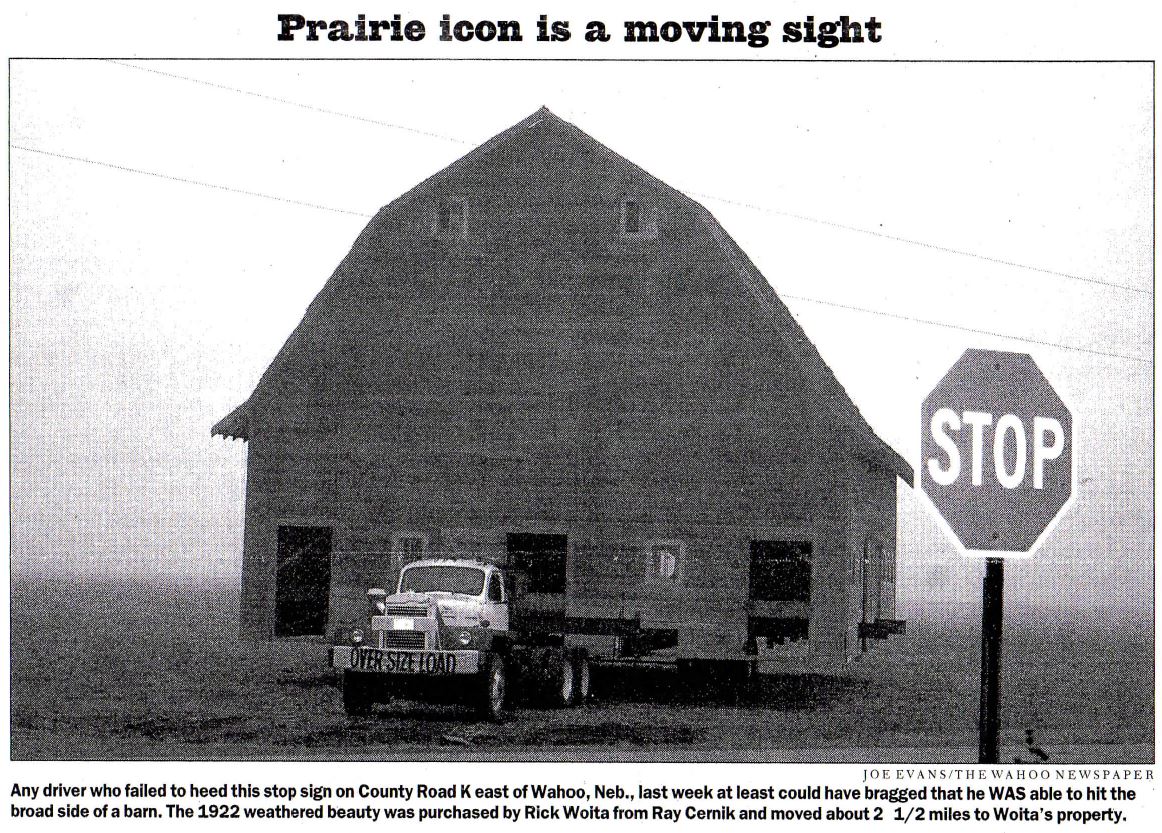
Original barn being moved off the property. Printed in local newspaper.
Barn on the move.
The barn was moved around 2018.
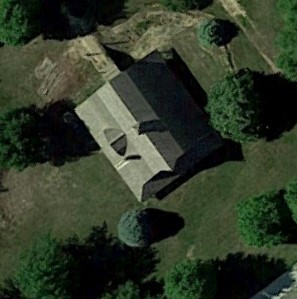
The aerial view of the old barn after move and refurbishment. Now used for events on the farm of Rick Woita outside of Wahoo.
Refurbished barn from top.
Aerial view of the barn from Google Maps.
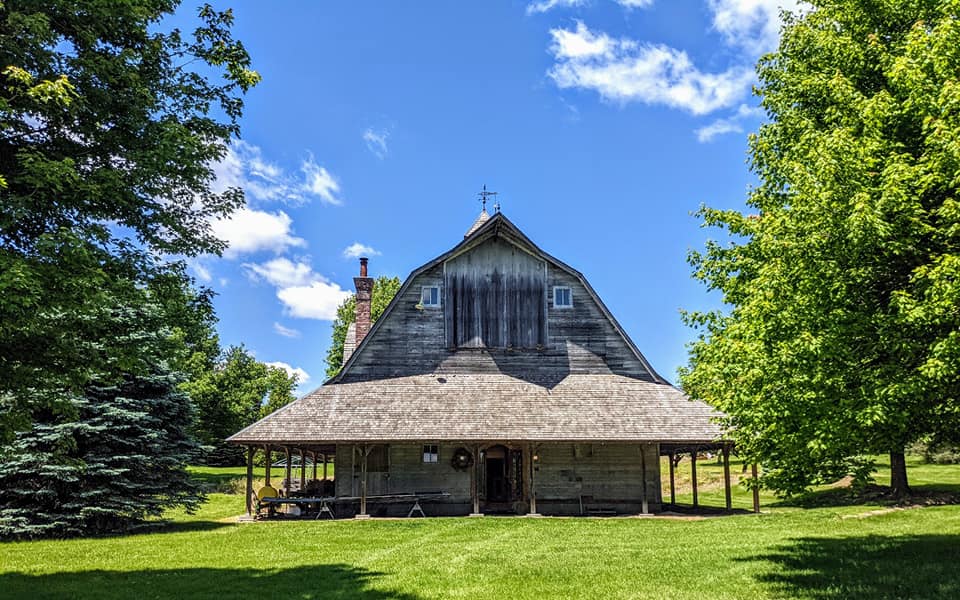
Front of the barn with the large door at the top. Door at the bottom left was where Frank had his workshop. The surrounding covered veranda was added after the move.
Refurbished barn front view.
Front view with door for bale elevator and windows along the top platform inside.
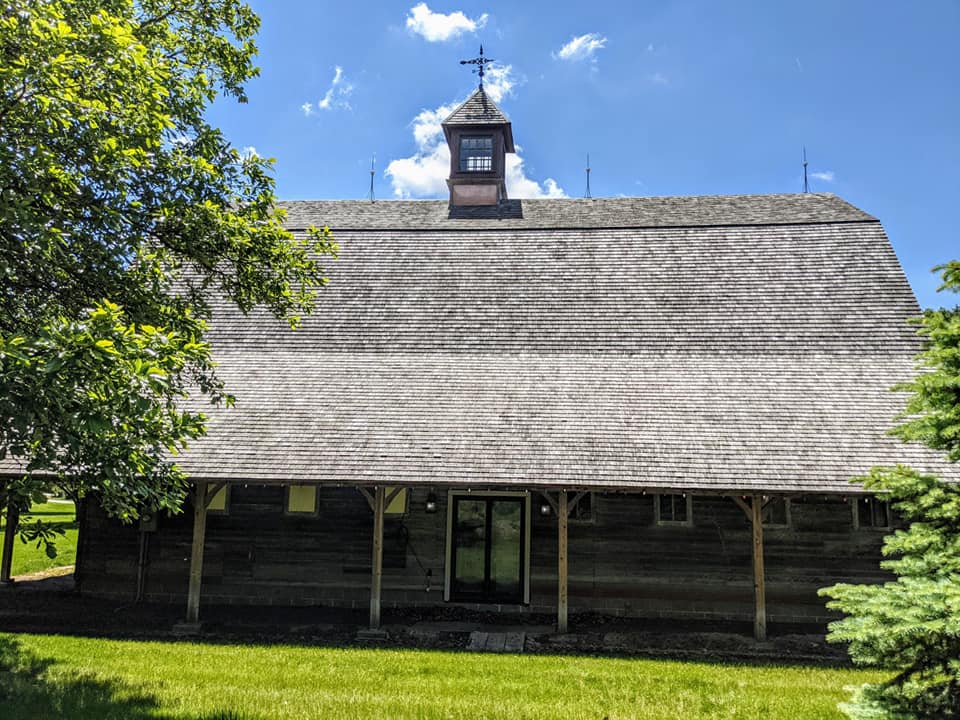
Side of the barn at the new location. It originally did NOT have any glass doors nor any glass on the steeple. The other addition are the covered areas on three of the sides of the barn.
Refurbished barn side view.
Several changes were made to ensure a more usable and visually pleasing event space.
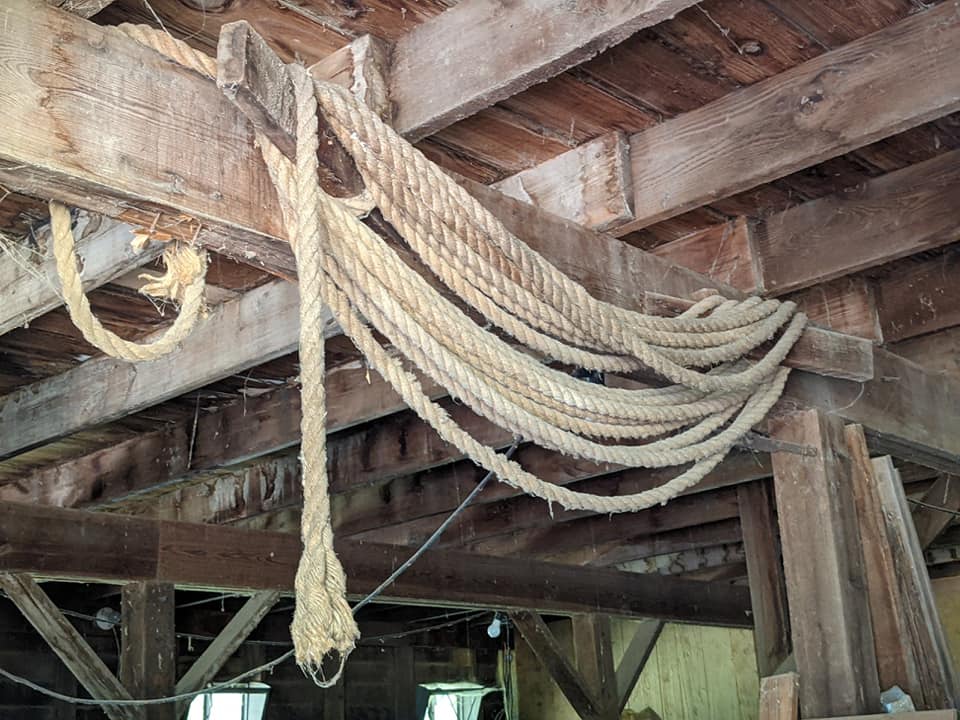
The top of the bottom floor, which supported the upper section where was stored for the winter.
Refurbished barn inside.
Rafters provided lots of places to hang and store items.
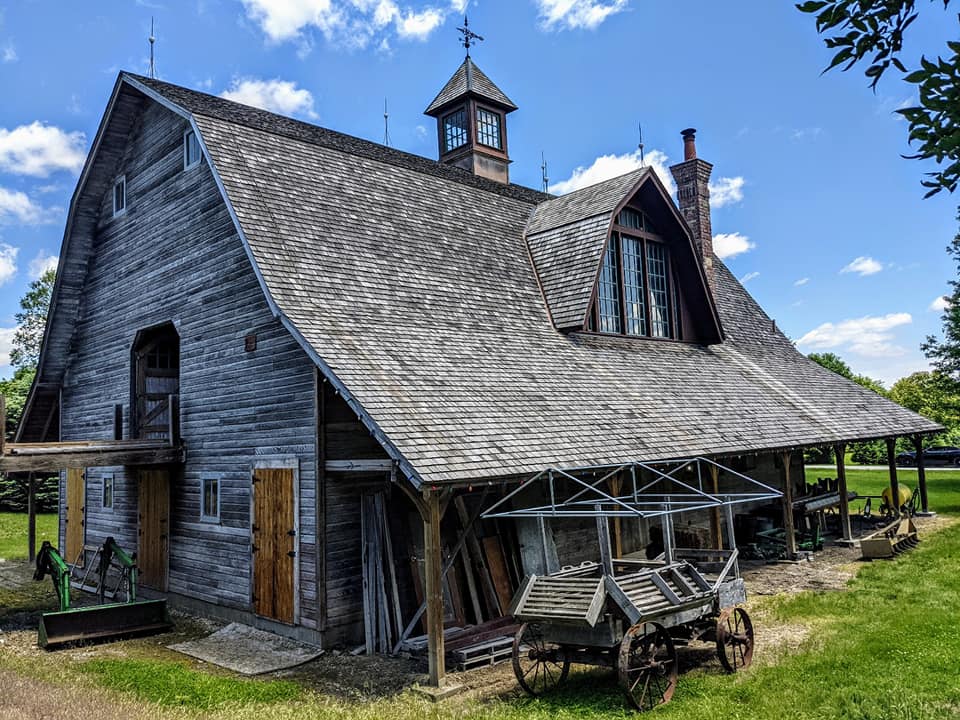
There was no fireplace in the original barn. The three doors on the bottom went out into the corral. The dormer with the three windows were added after the move.
Refurbished barn side and back views.
Several additions were made after the move to enhance the usability and aesthetics for the event space.
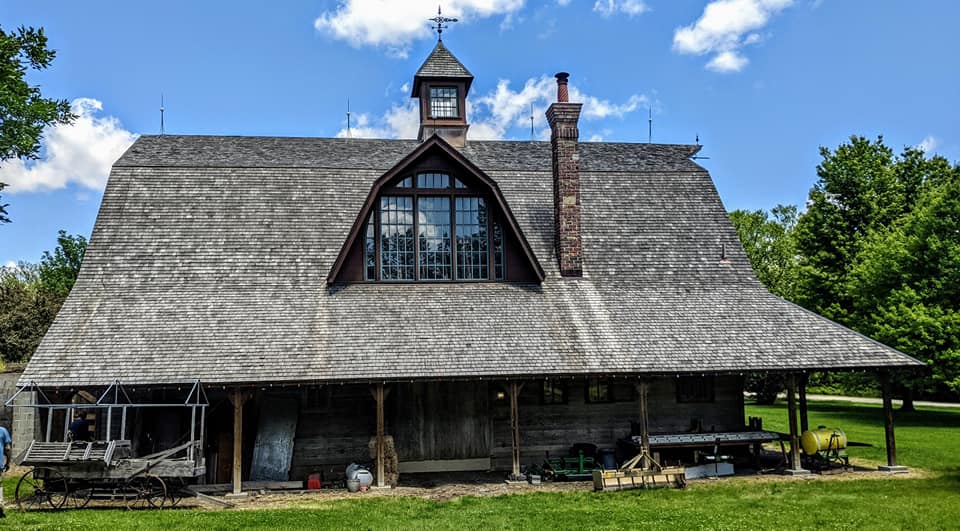
Another side view of the barn featuring the added "dormer" with the three windows. This side of the barn was where the pigeon "lofts" were located just under the roof line.
Additional Side View.
New chimney and fireplace added. The "cupola" at the top is also not the original.
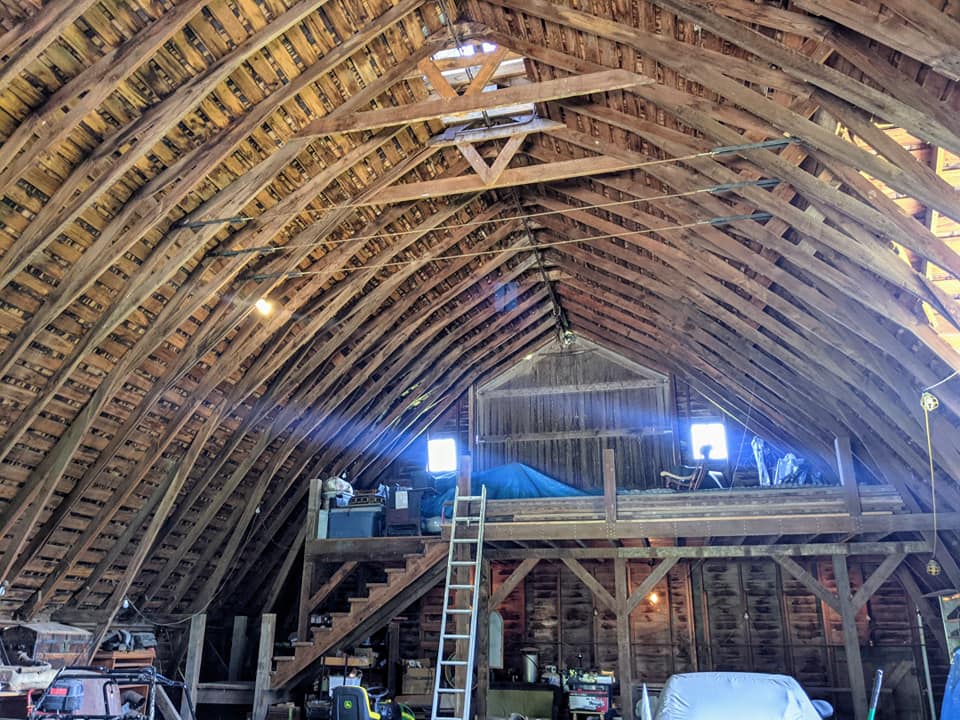
The second floor of the barn where large stacks of alfalfa where along the rear of the barn. These stacks were often 10'-15' tall.
Since the alfalfa had dried for many days, the barn would soon fill up with a huge amount of hay dust and particles. It was a surreal image. There were usually some small holes in the roof of the barn where sunlight would come through. It would look like laser beams as the pins of light hit all of the dust and particles. It was a great way to see where the roof holes were. I can still smell the aroma of the alfalfa/hay. I loved it and never got hay fever or allergies. I guess it helped all of our immune systems.
Barn from the inside.
This is the second floor where the bales of straw and/or alfalfa were stacked.
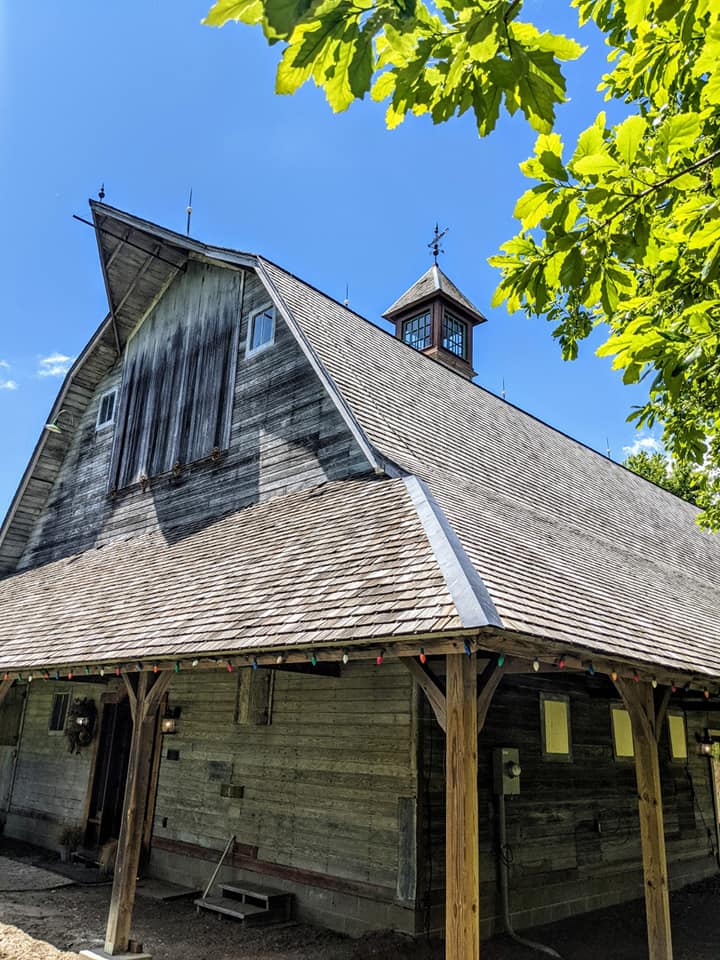
This picture taken at the new location on Rick Woita's property is of the Northwestern corner of the barn.
Corner picture of the front.
Corner picture of the front at it's new location on the property owned by Rick Woita.
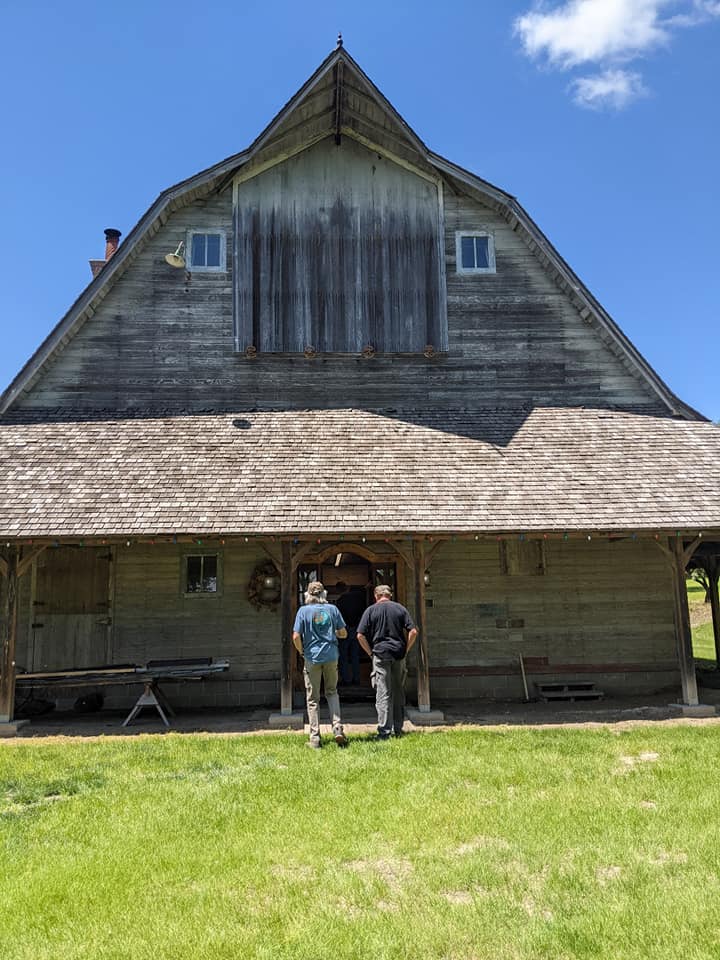
This is the front of the barn with the large door for loading in the bales into the top bay.
Front of the barn.
Front of the barn with cousin Steve getting the tour.
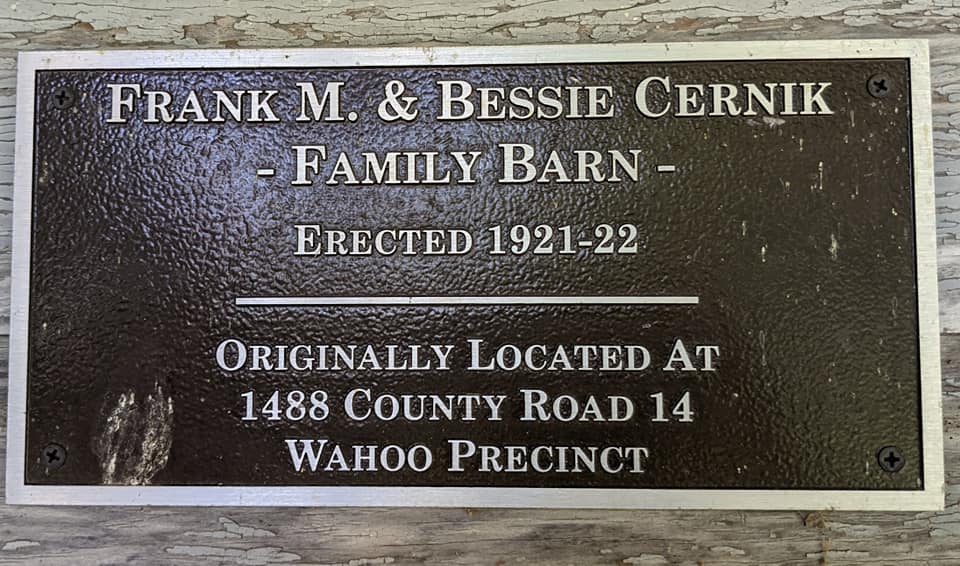
This is the plaque added by the new owner, Rick Woita. It was attached to the barn honoring our grandparents, Frank and Bessie Cernik.
Plaque added to the barn.
Plaque added to the barn honoring our grandparents.
Wahoo House
0 itemsWhen Frank and "Bessie" retired from farming, they moved into this house in Wahoo, Nebraska, right across from St. Wenceslaus Church.
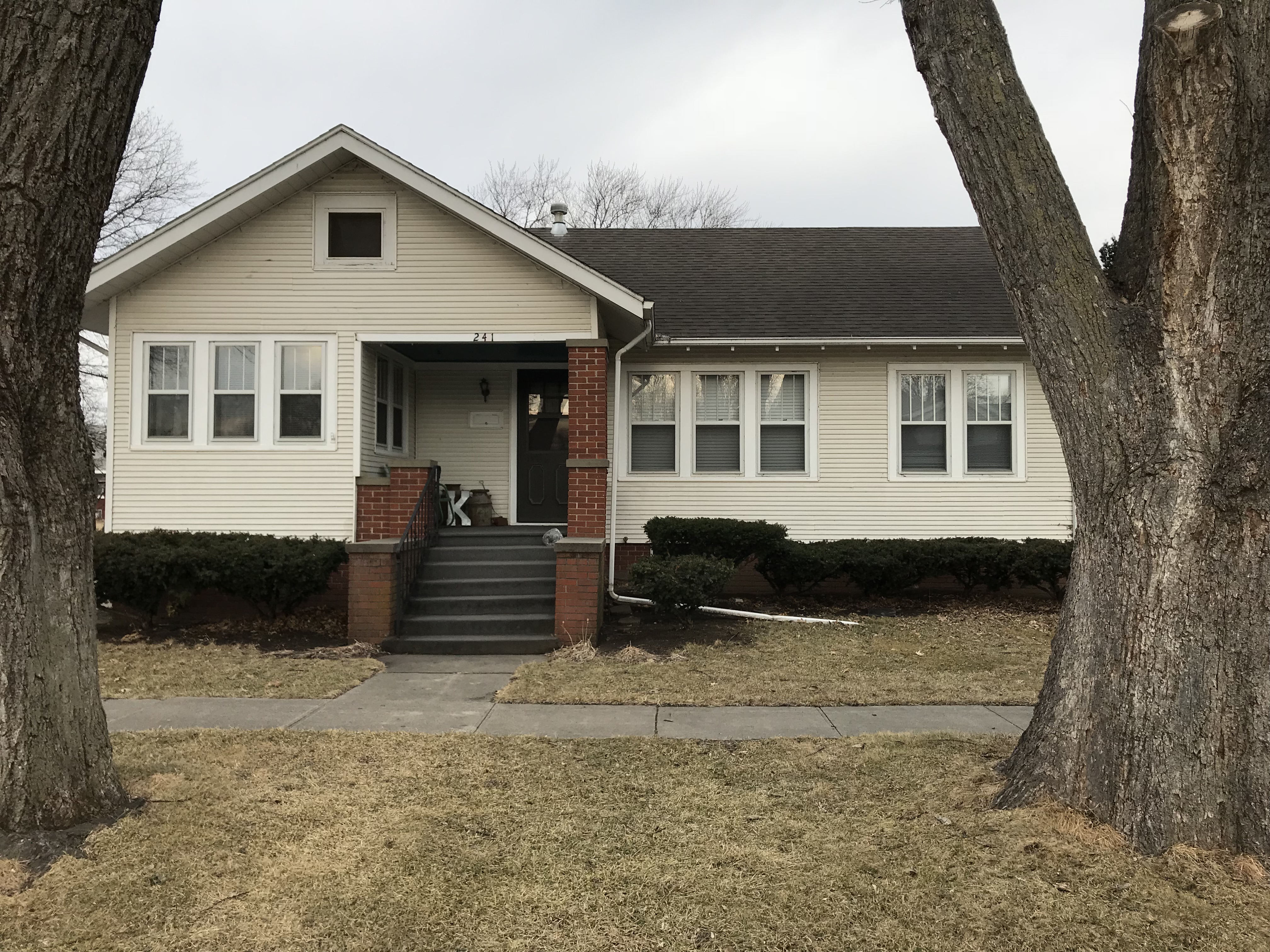
The front view of the house in Wahoo that Frank and "Bessie" moved into when they retired from farming.
Frank and "Bessie" Wahoo house front.
Front of Frank and "Bessie" Černík (ZIMOLA) Wahoo House.
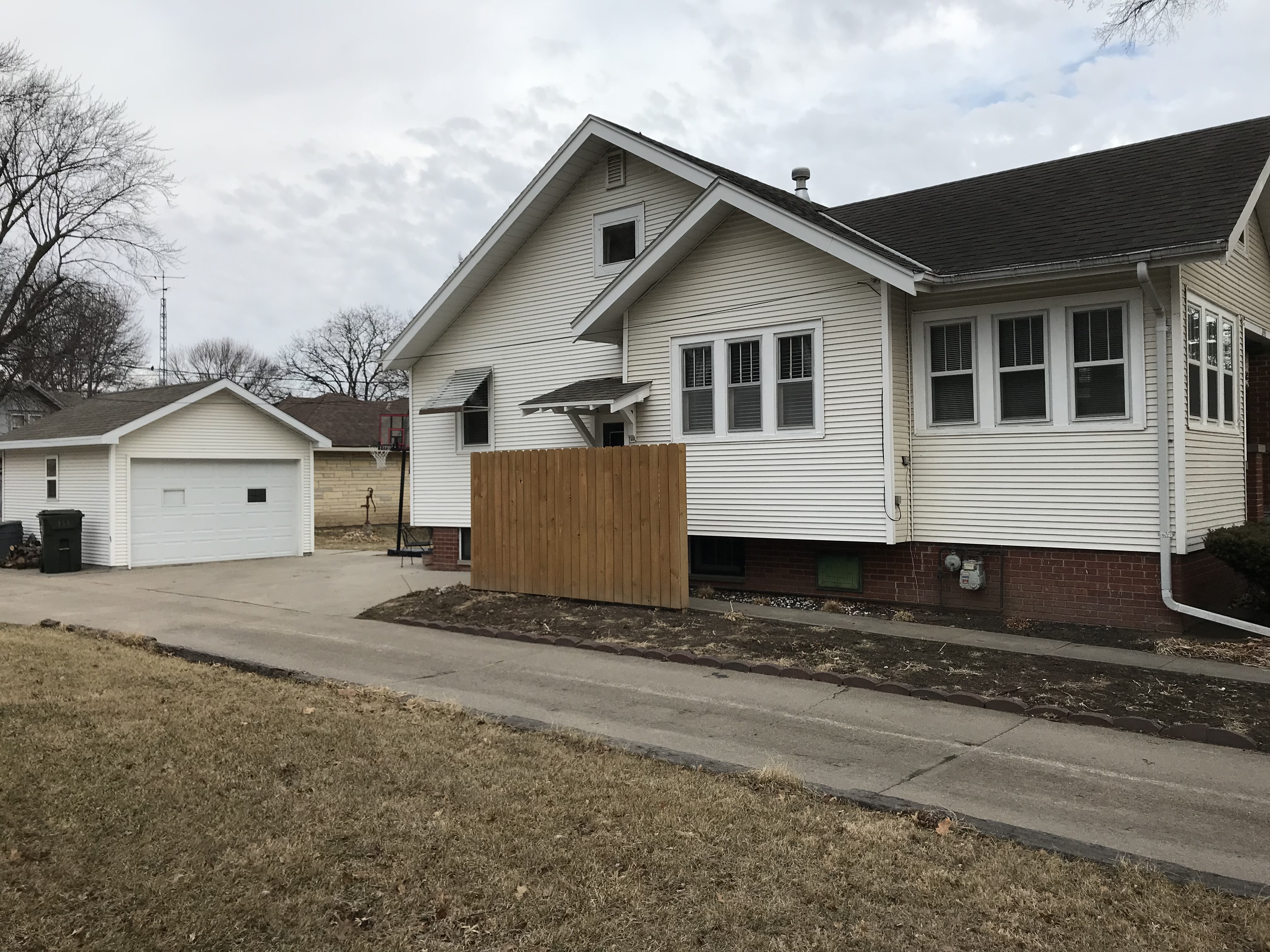
Side and garage of Frank and "Bessie" Černík (ZIMOLA) Wahoo house.
Grandma "Bessie" used to have a HUGE rose bush and trellis where that fence is now. She loved her roses.
Frank and "Bessie" Wahoo house side.
Side view of Wahoo house.
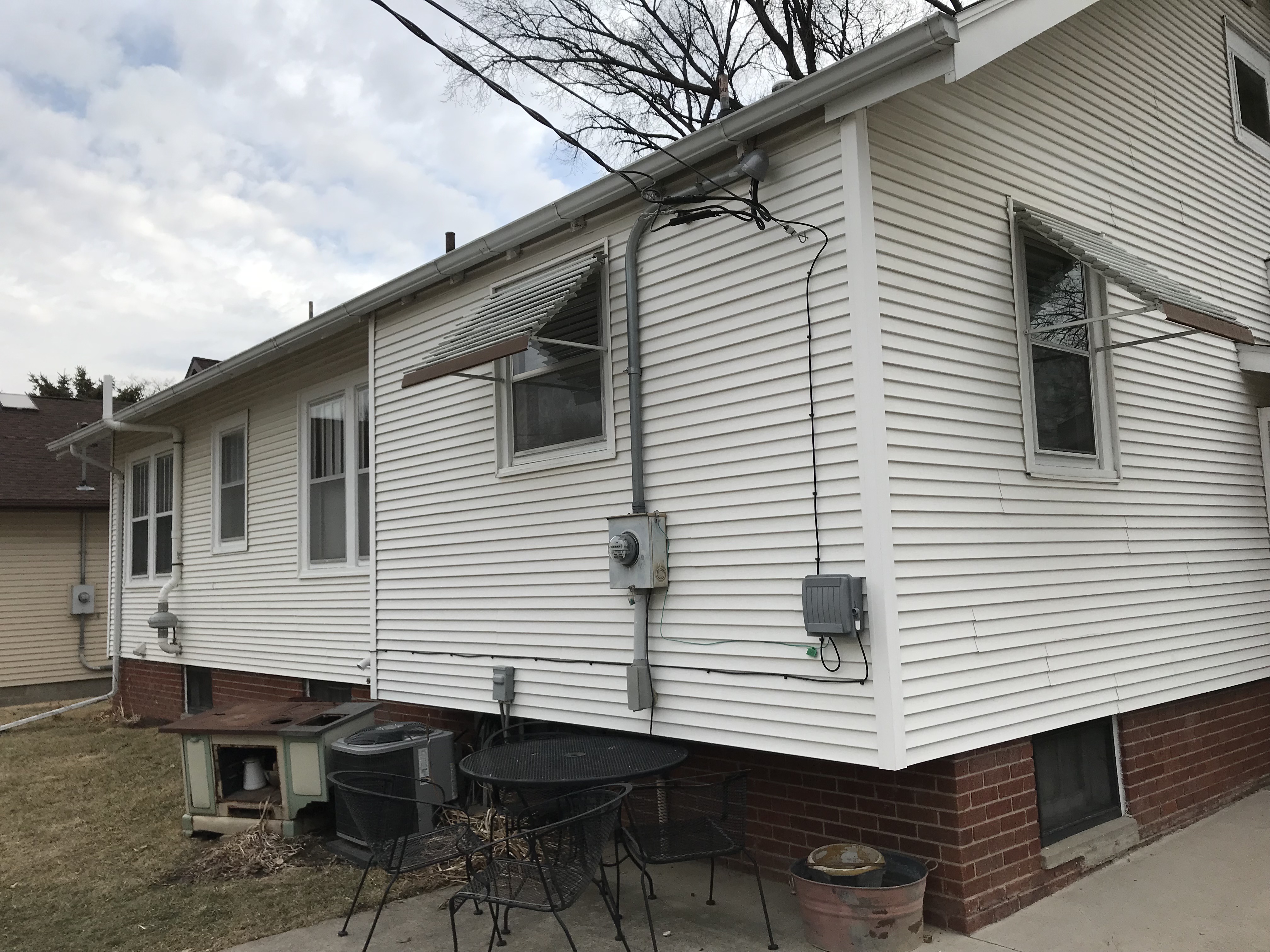
Back of Frank and "Bessie" Černík (ZIMOLA) Wahoo house.
Frank and "Bessie" Wahoo house side.
Back view from the garage.
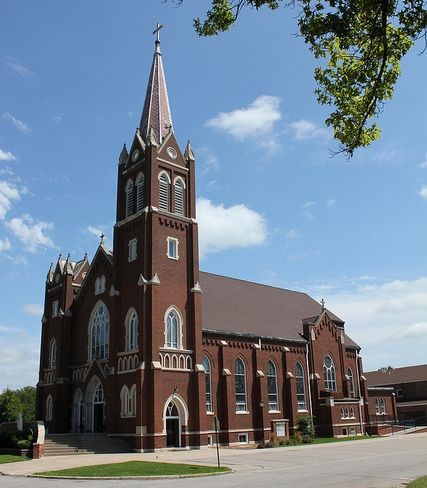
St. Wenceslaus Church located across the street for Frank and "Bessie" Černík (ZIMOLA) house in Wahoo that they retired in.
St. Wenceslaus Church from house.
Bessie picked this home because of how close it was to St. Wenceslaus Church.
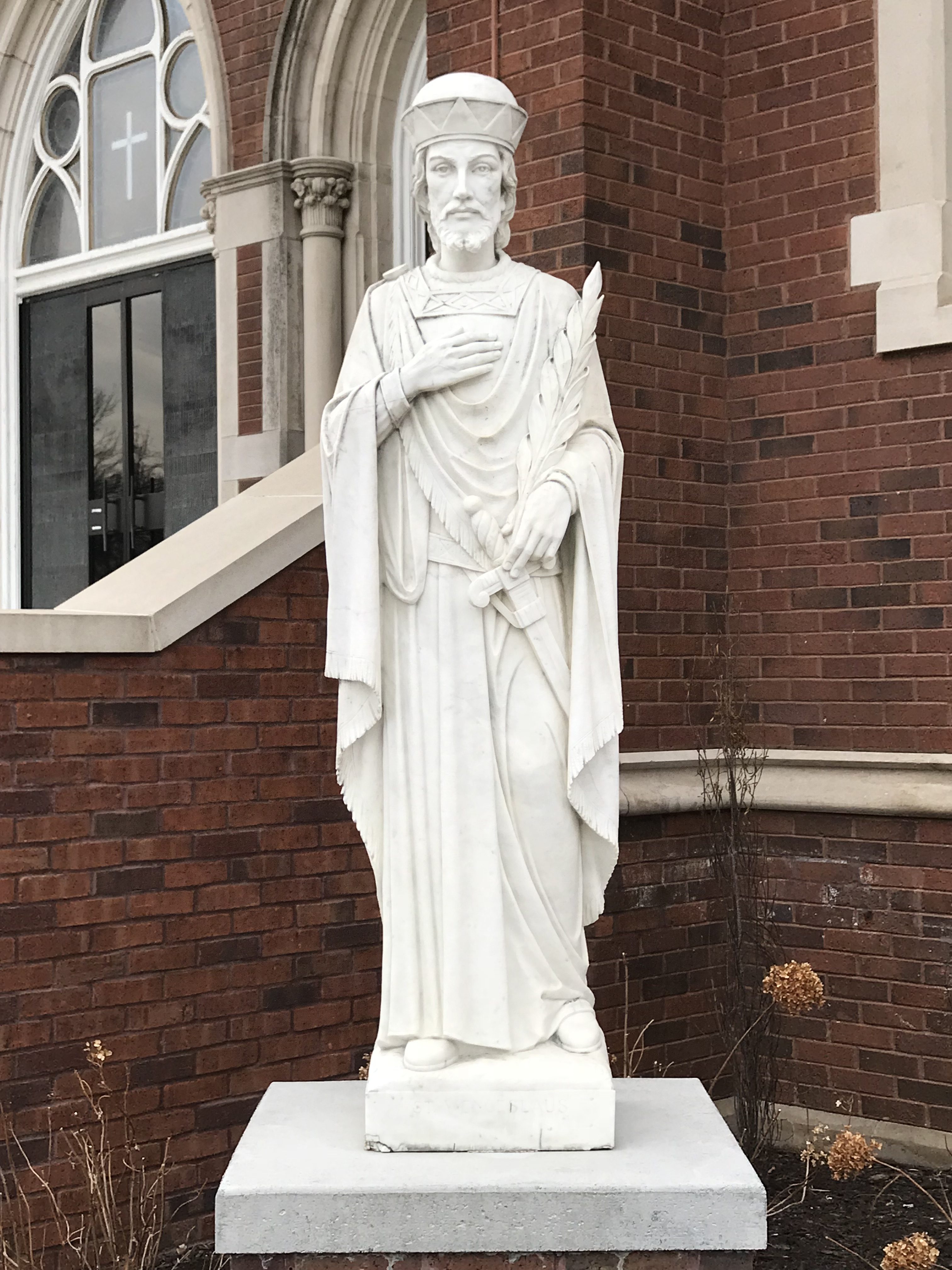
St. Wenceslaus statue donated to the church by our grandparents Frank and Bozena "Bessie" Cernik (ZIMOLA).
Our grandparents made a big deal out ensuring that the church did not disclose to the public who made the donation. The statue was created in Italy and then shipped to Wahoo.
St. Wenceslaus Statue.
The statue is now located at the front of the church to the right of the steps.
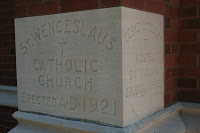
The cornerstone for St. Wenceslaus was laid in 1921.
St. Wenceslaus Church cornerstone.
The cornerstone is behind our grandparents donated statue.
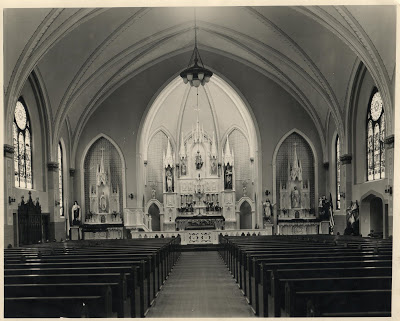
The original interior of St. Wenceslaus church. This picture was taken in circa 1940.
St. Wenceslaus Interior.
Original design.
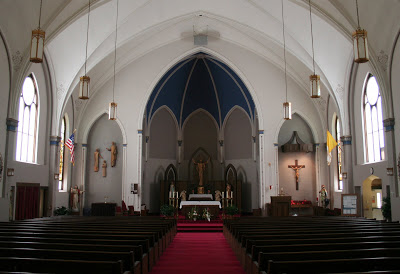
The interior of St. Wenceslaus church was remodeled in the 1970s. It was an attempt to modernize the aesthetics, the utilities and safety. It was not well received
St. Wenceslaus Interior after "modernization".
The church was remodeled in the 1970s.
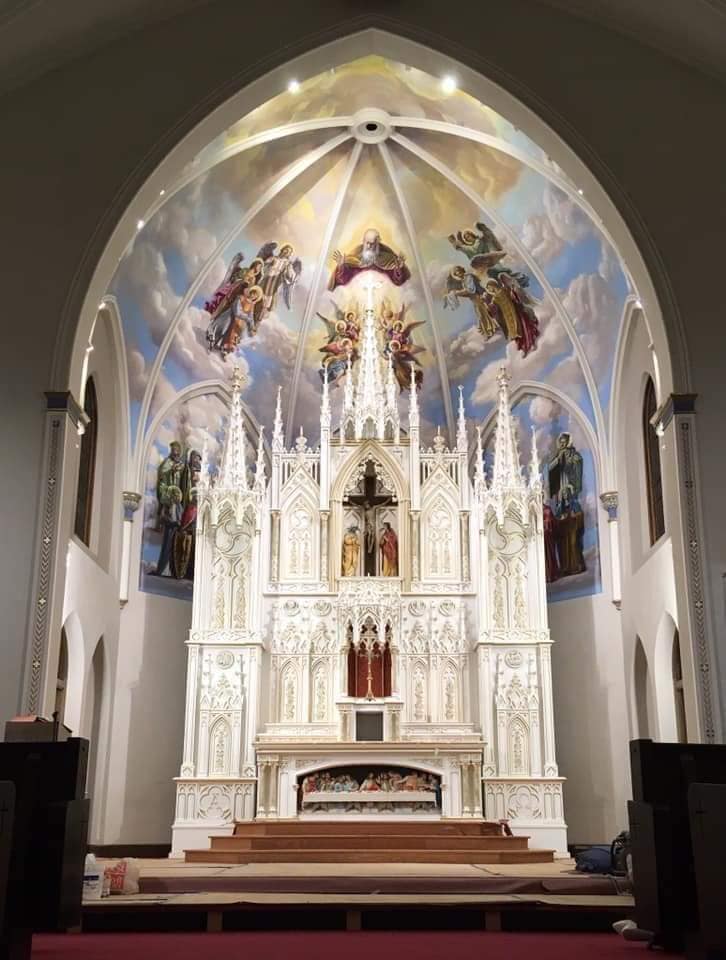
After almost 50 years, the church was once again remodeled —restored— bringing back the original design and aesthetics. Luckily, many of the statues had been put in storage after the remodel in the 1970s.
St. Wenceslaus Interior after restoration
The church was "restored" in the 2019.
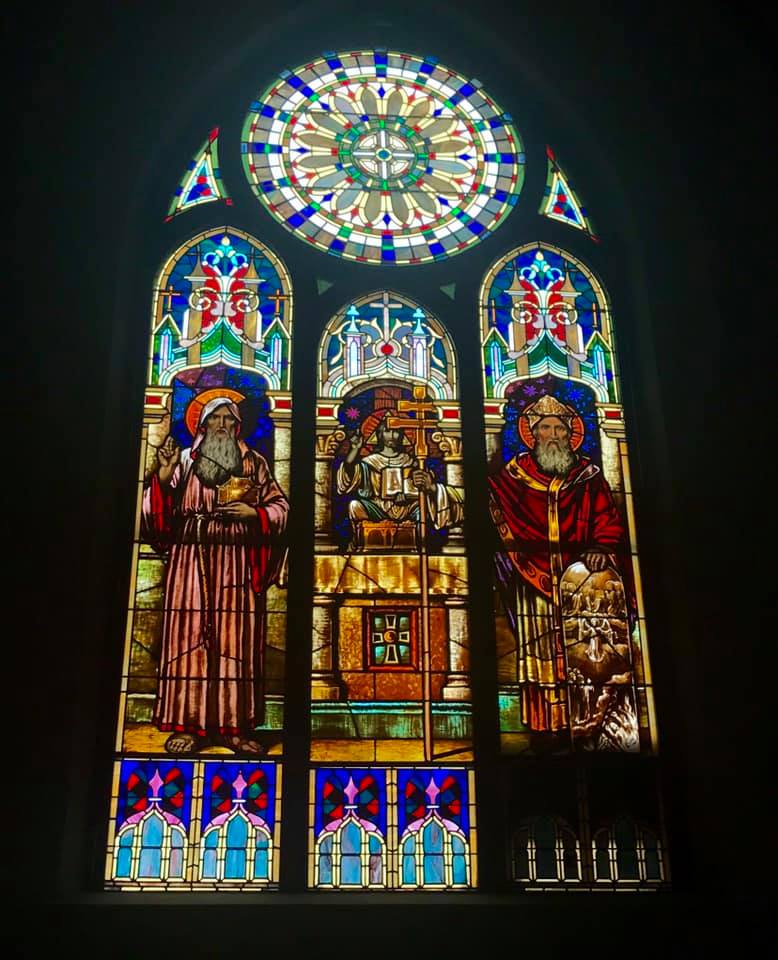
One of the main stained glass windows in the church.
St. Wenceslaus stained glass window.
One of several.
Moravia Homes
0 itemsThese are the towns and homes in Moravia where our Černík and Vesely ancestors were born and lived.
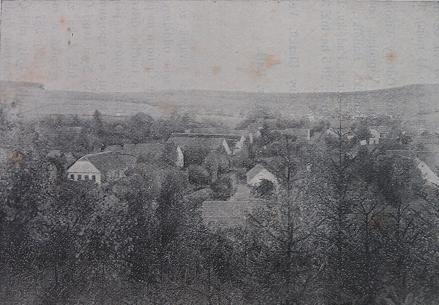
The birthplace of our 3rd-great-grandfather, Jakub Černík, was the town of Číhalín. This is a photo of the town taken in 1881.
Our 2nd-great-grandmother, Rosalia Veselá and our great-grandfather, Matěj Černík, were also born here.
Číhalín in 1881.
Birthplace of Jakub Černík, Matěj Černík and Rosalia Veselá.
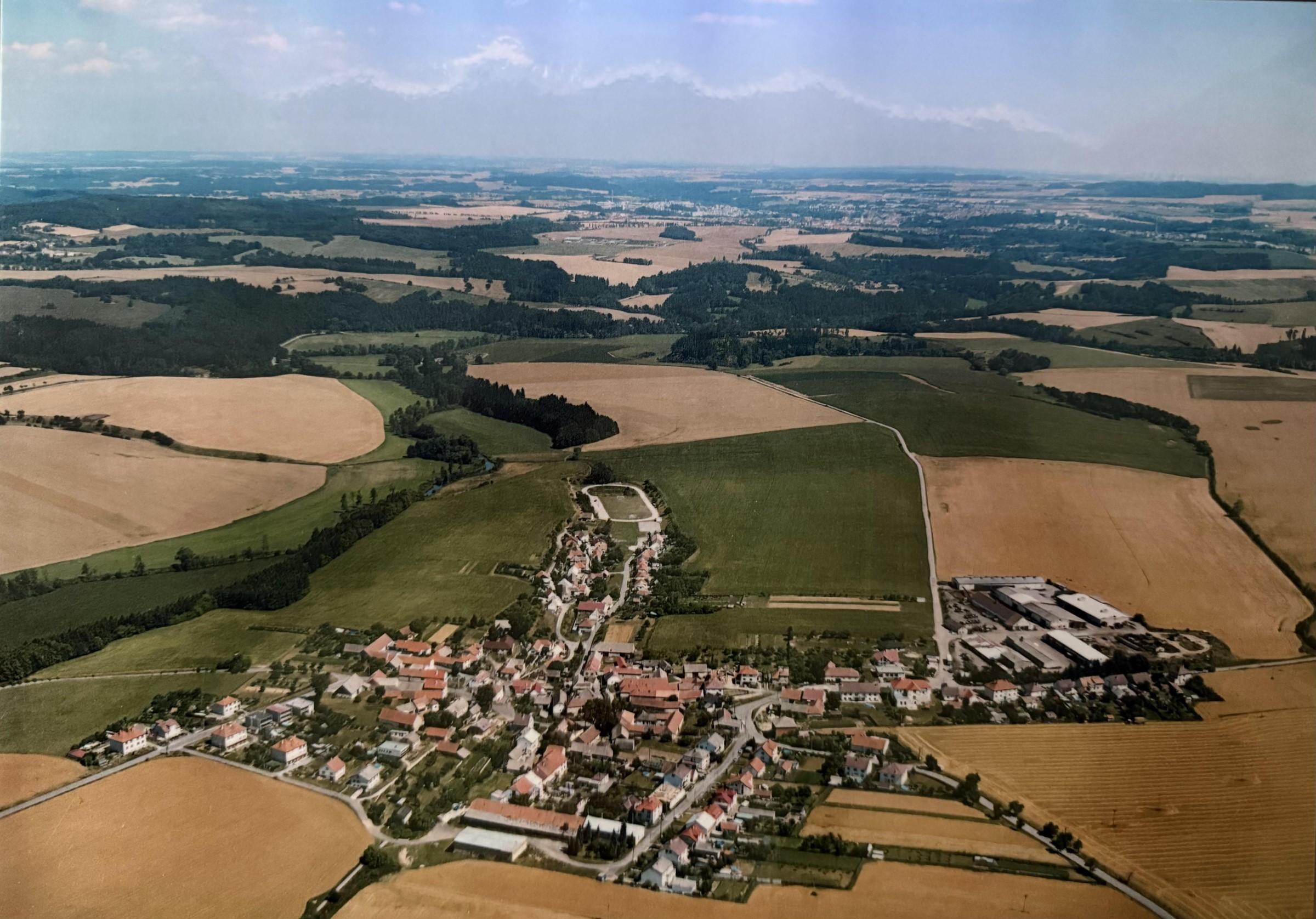
This photo of Číhalín was taken in 1999. I got a copy when my five brothers and I visited the Czech Republic in 2006 on visit to meet our Czech relatives.
Číhalín in 1999.
Birthplace of Jakub Černík, Matěj Černík and Rosalia Veselá.
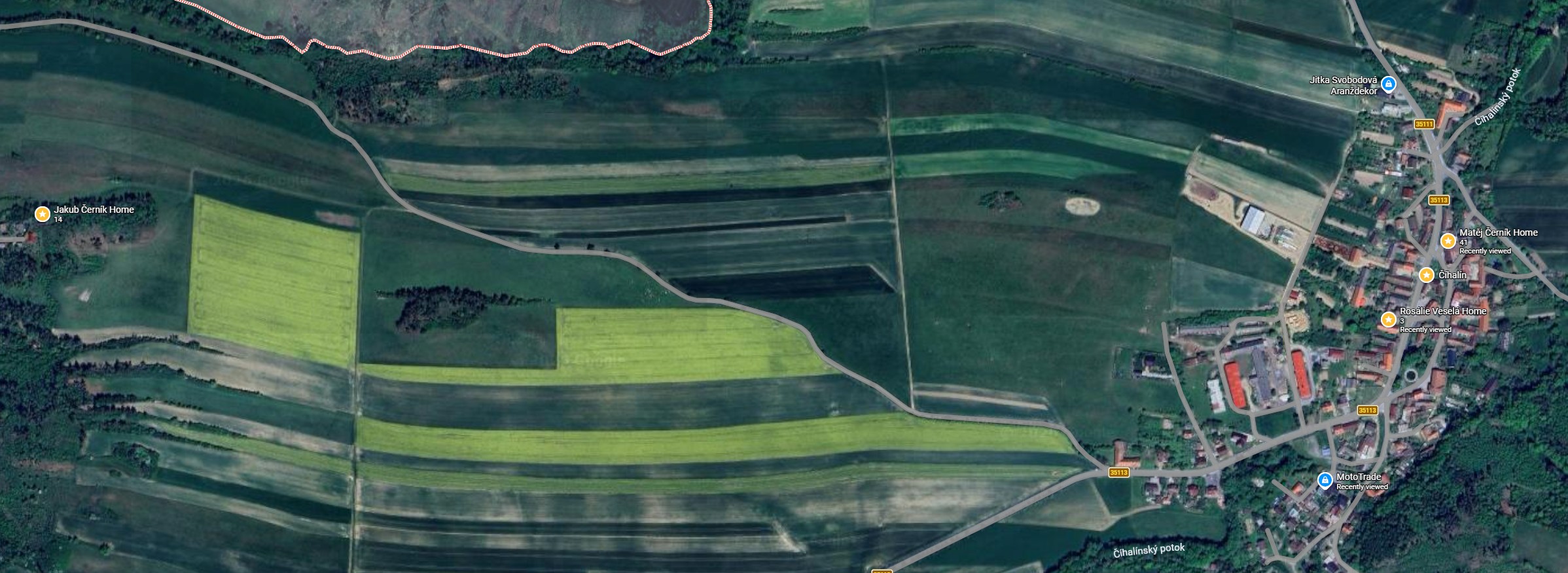
This image of Číhalín was captured from Google Maps in 2026 and shows the three homes of our ancestral allied families.
Jakub Černík at house #14. Matěj Černík at house #41. Rosalia Veselá at house #3.
Birthplace houses in Číhalín.
Many of our allied families came from Číhalín.
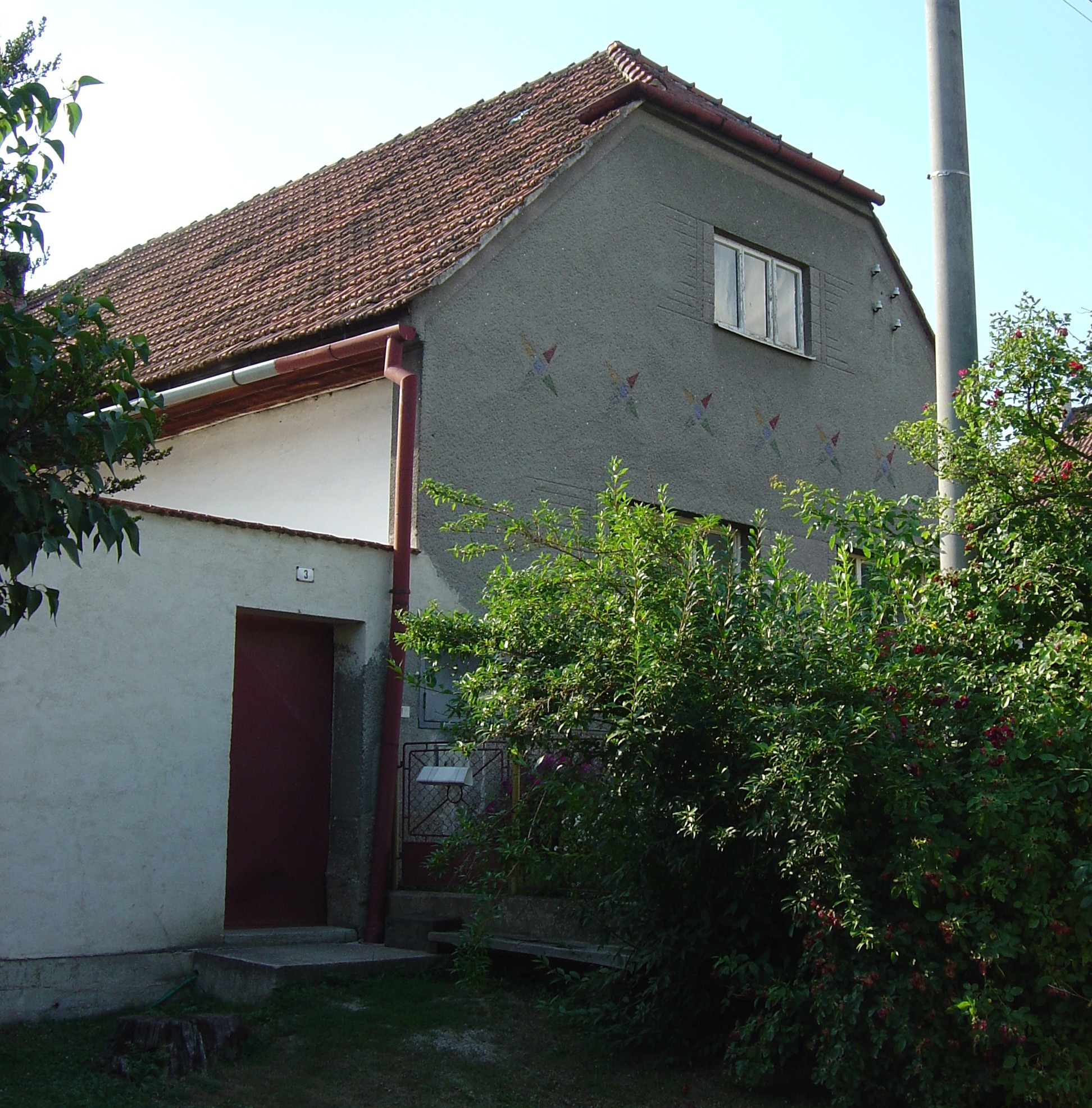
Here is the home where our 2nd-great-grandmother, Rosalia Veselá, was born. It is the home of her parents, Jan Vesely and Marianá Zapomnelová, our 3rd-great-grandparents.
My five brothers and I were invited for a family BBQ here on our last day in the Czech Republic. Great food, drinks and family hospitality.
House #3 Číhalín, birthplace of Rosalia Veselá.
The side of the Vesely home, still owned by our Vesely relatives. inside.
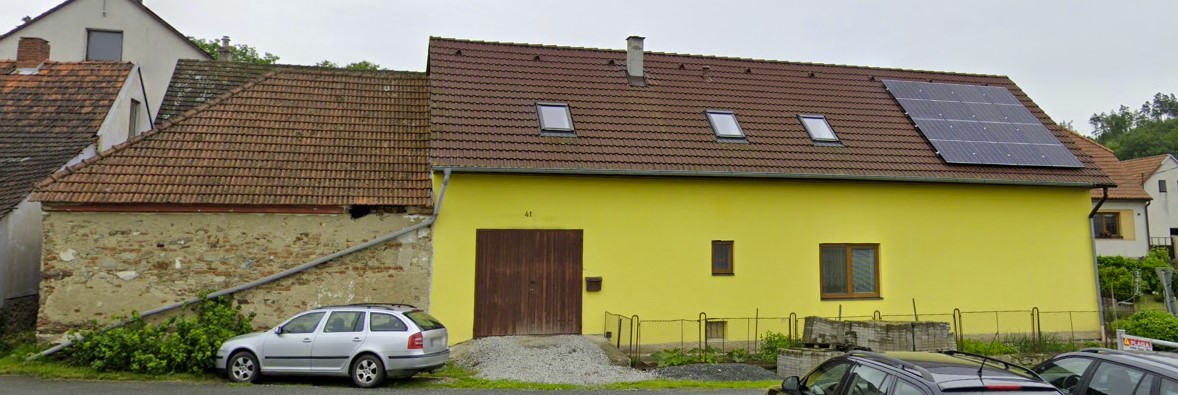
Though our genealogist was unable to locate any of our Černík relatives remaining in any of the towns, we did locate the birthplace or our great-grandfather, Matěj Černík.
House #41 Číhalín, birthplace of Matěj Černík.
No Černíks lived in Číhalín that we could locate.
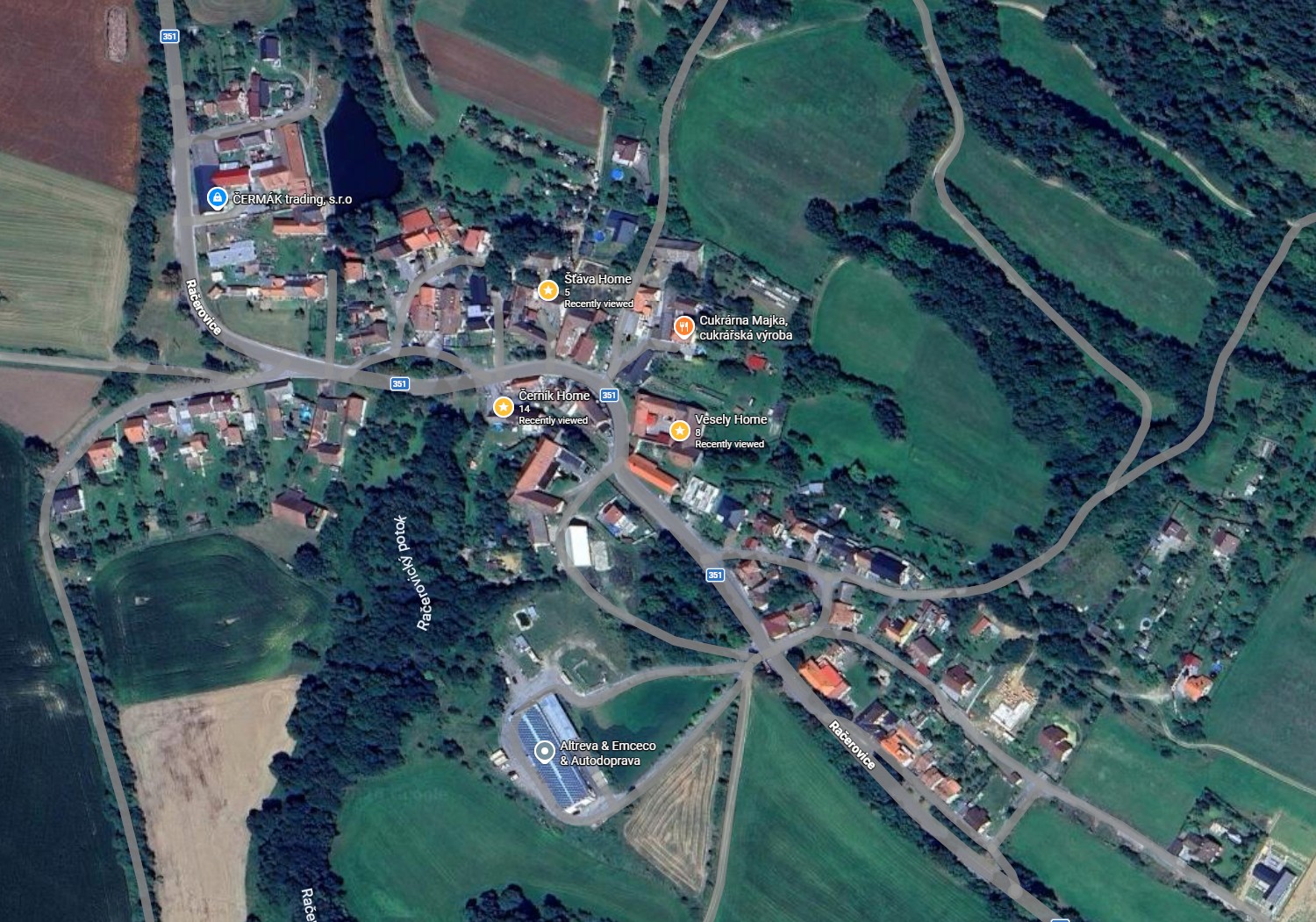
This image of Račerovice was captured from Google Maps in 2026 and shows the three homes of our ancestral allied families.
Matous and son, Jan Vesely at house #8. Kateřina Šťávová at house #5. Jan Černík at house #14.
Birthplace houses in Račerovice.
Many of our allied families came from Račerovice.
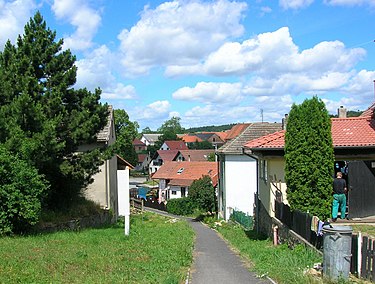
This photo of Račerovice was taken in 2006 on our "brothers" visit to our ancestral homeland.
Path into Račerovice.
One entrance into the town of Račerovice.
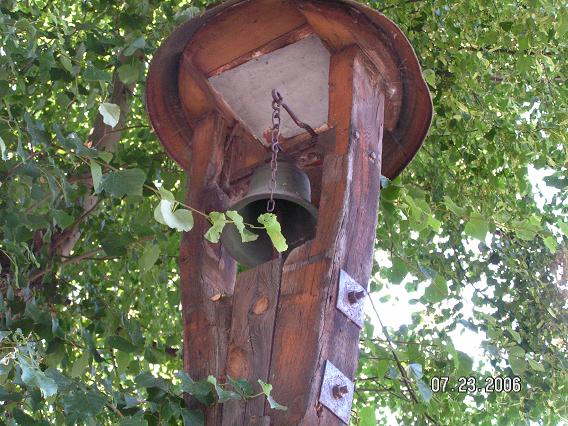
In the town center of Račerovice, there is a cross and this bell.
Račerovice Town Center bell.
Račerovice bell.
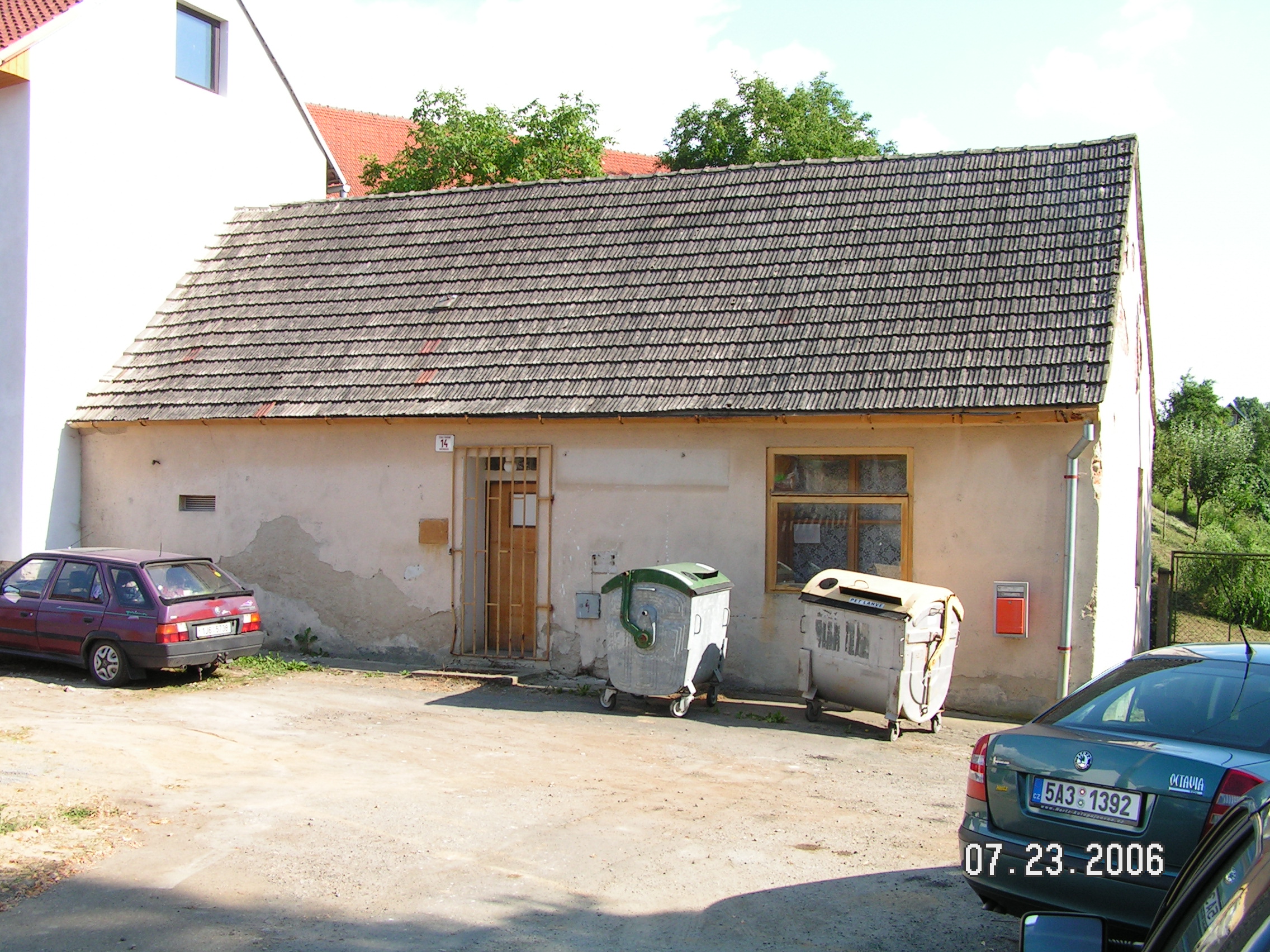
The birthplace of our 2nd great-grandfather, Johann "Jan" Černík, house #14 in Račerovice. The house may have been larger back when he was born in 1830. The homestead seems pretty small now.
House #14 in Račerovice, birthplace of Johann "Jan" Černík.
This photo of Jan's birthplace was taken in 2006 on our "brothers" visit to our ancestral homeland.
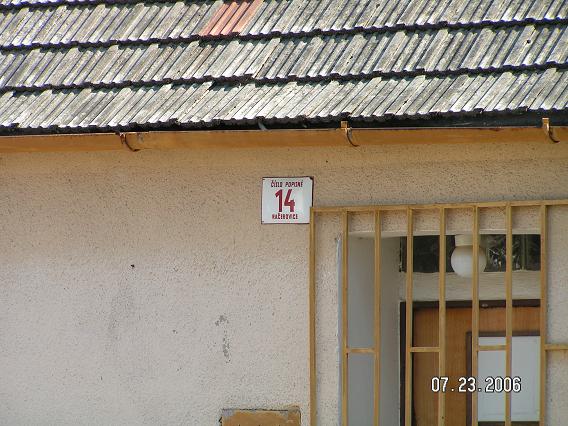
This is a closeup of Jan's birthplace from our 2006 trip.
Closeup of Jan's birthplace
When I researched recently to determine if the attached building was part of the house, Google Maps showed that it is House #13. Maybe there was more to House #14 almost 200 years ago in the back or the right.
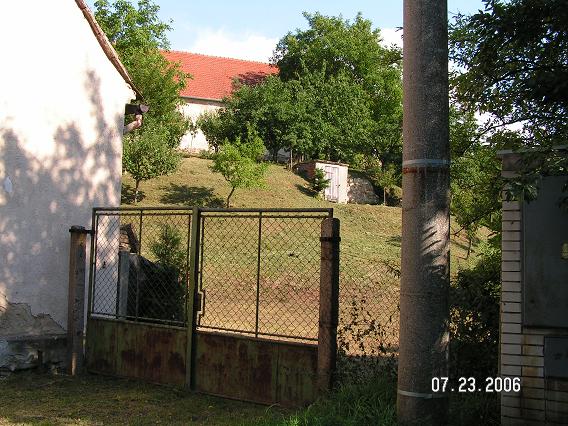
The back area of House #14.
House #14 backyard.
Not much to see and shared I'm sure with House #13..
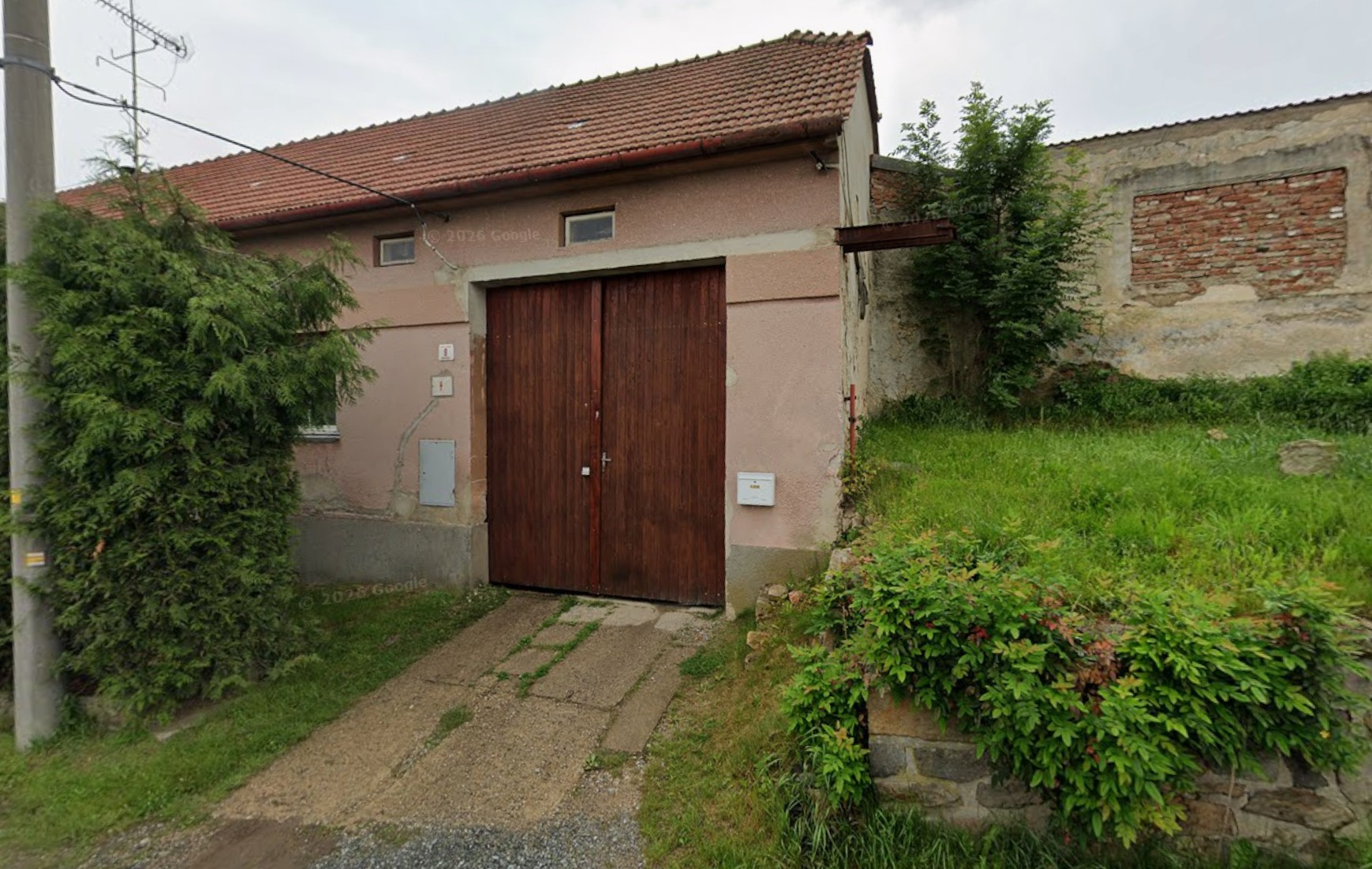
Though Jan's wife Rosalia Veselá was born in Číhalín, her father and grandfather were born in House #8 in Račerovice.
Our 3rd great-grandfather Jan Vesely, was born here in 1793. His father, our 4th great-grandfather Matous Vesely, was born here in 1763.
House #8 in Račerovice, birthplace of Matous and Jan Vesely.
This photo of Jan's and Matous' birthplace was taken in 2006 on our "brothers" visit to our ancestral homeland.
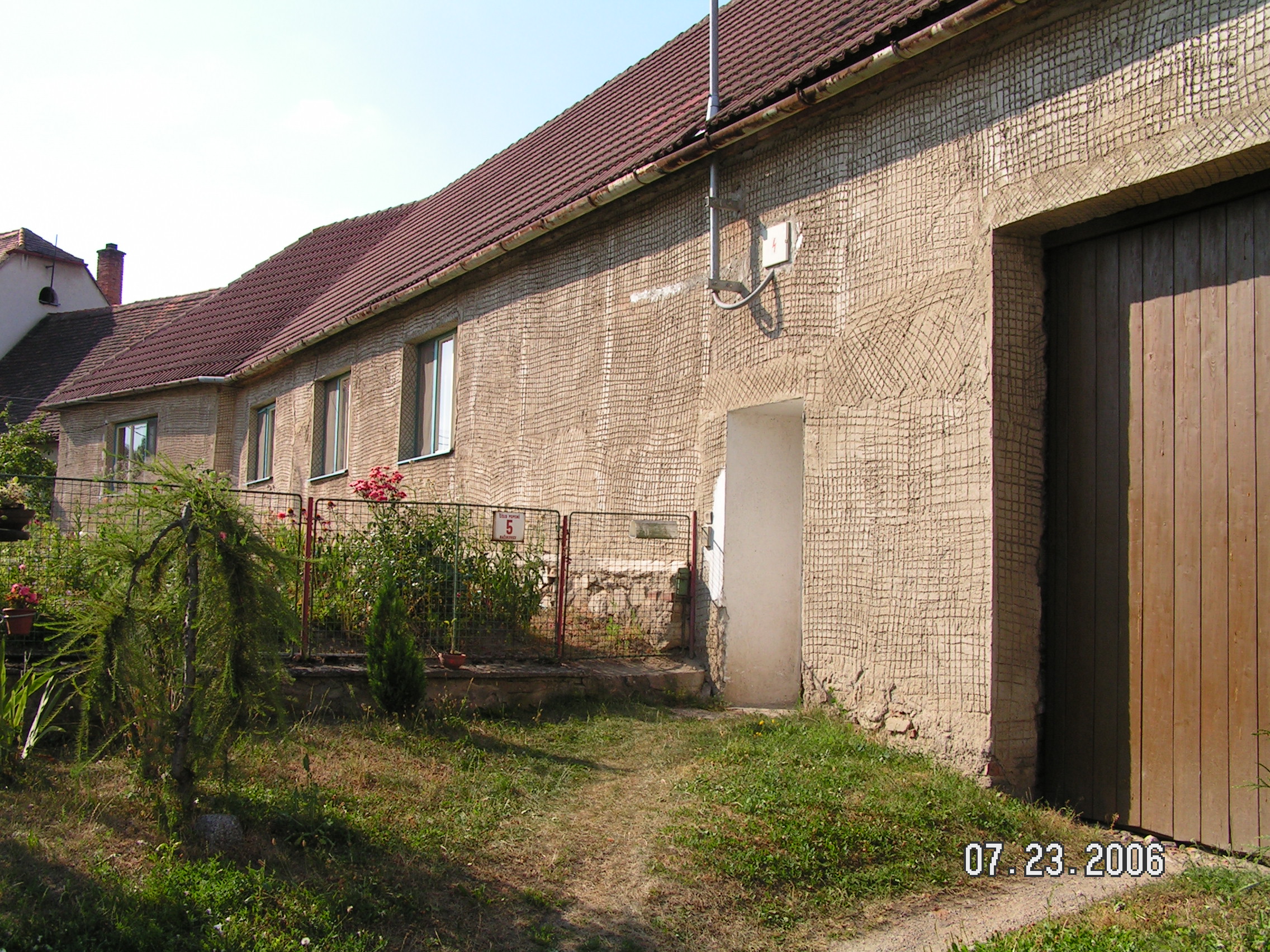
House #5 in Račerovice, birthplace of Kateřina Šťávová. Kateřina was our 3rd great-grandmother.
Kateřina would go on to marry Jakub Černík who was born and lived in Cíhalín some 4.5 miles away. I am sure the families knew each other from the main Catholic church in the area in the town of Přibyslavice. Or perhaps the church in Červená Lhota where the Černíks were baptized.
House #5 in Račerovice, birthplace of Kateřina Šťávová.
This photo of Kateřina's birthplace was taken in 2006 on our "brothers" visit to our ancestral homeland.
Portraits
0 itemsPortraits description
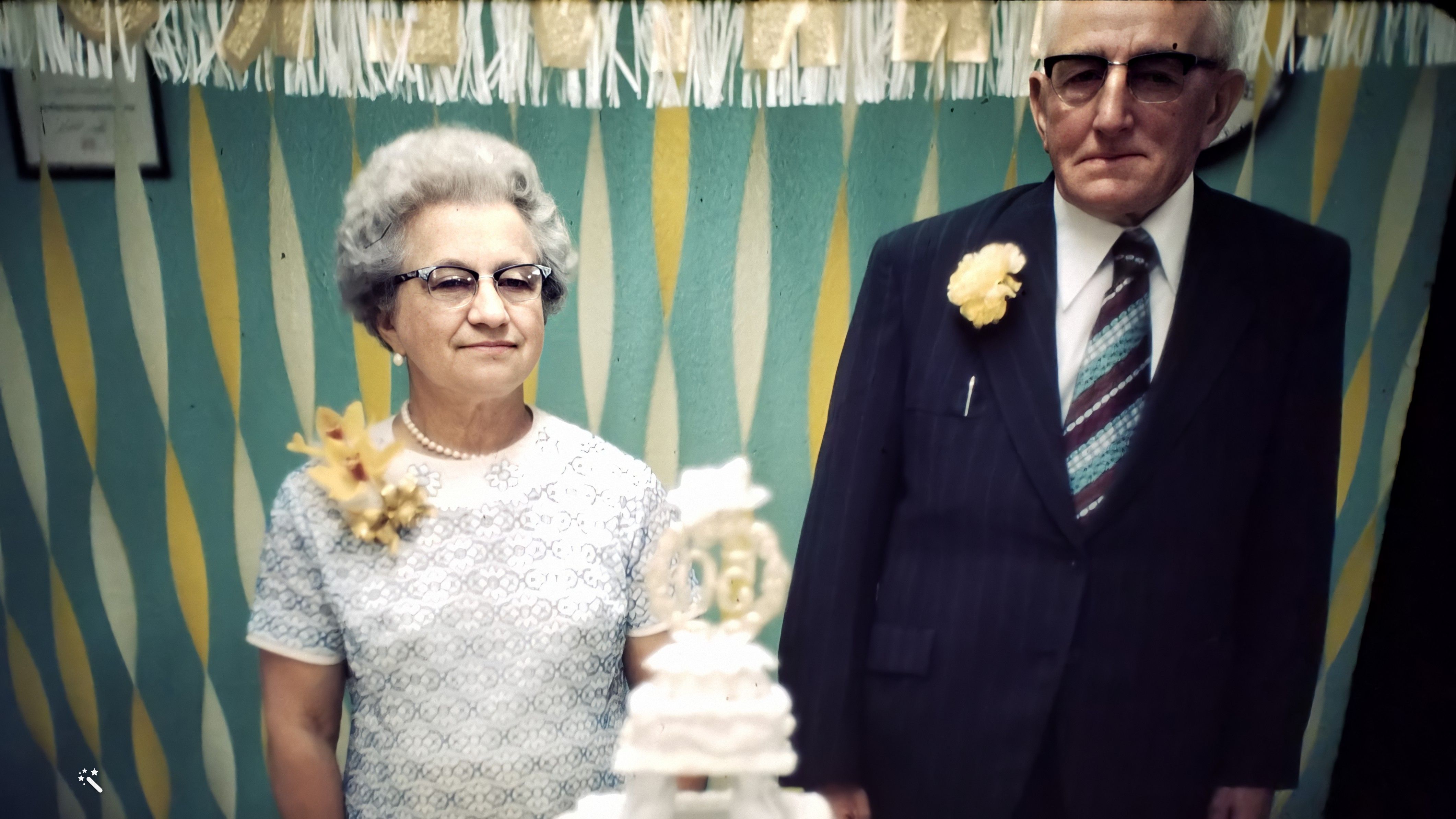
Bessie and Frank Černík celebrating their 50th wedding anniversary.
Bessie and Frank's 50th Anniversary.
A golden milestone for the Černík family.
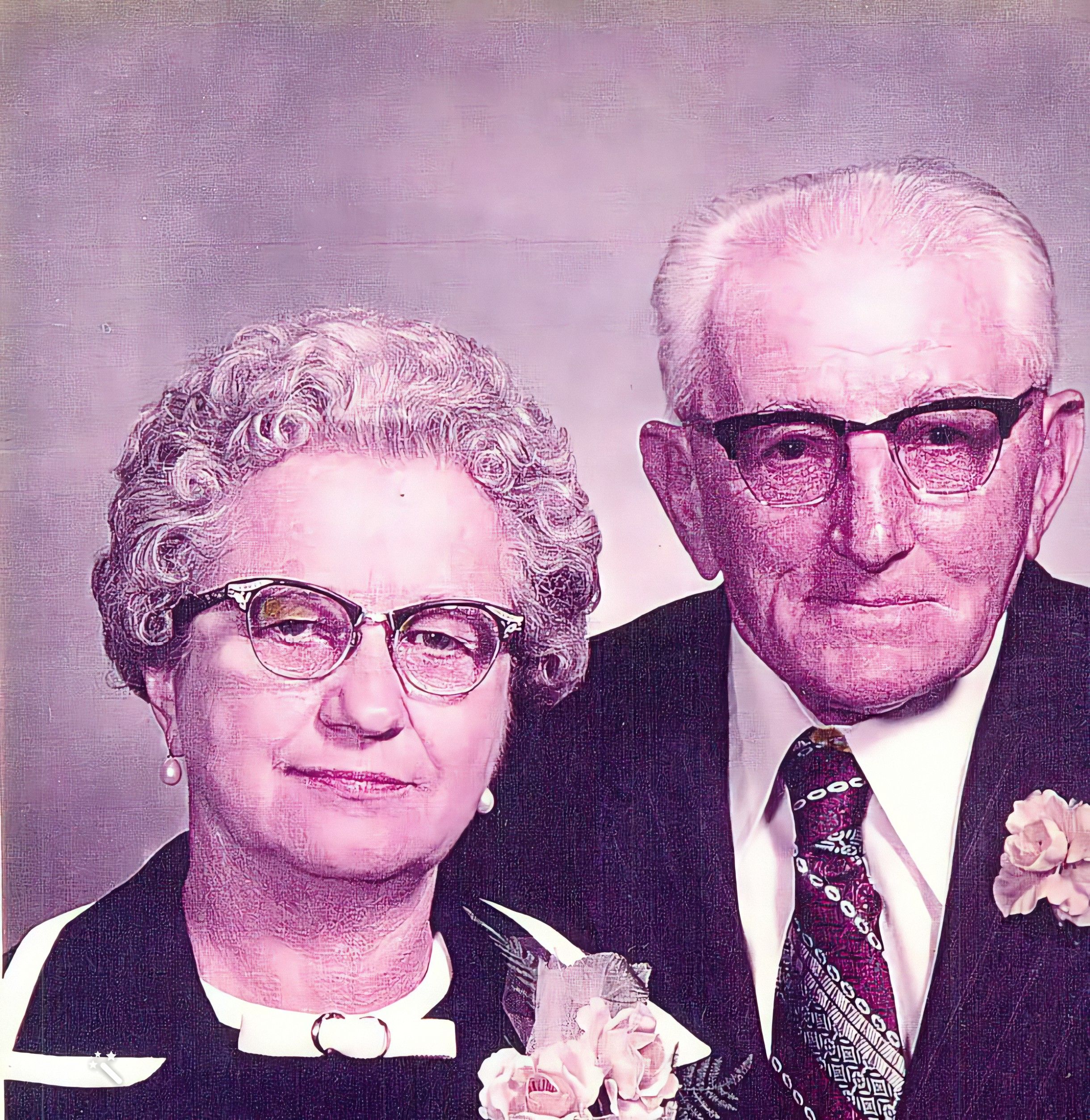
Frank and Bessie Černík at their 50th wedding anniversary celebration.
Frank and Bessie's 50th Anniversary.
Fifty years together.
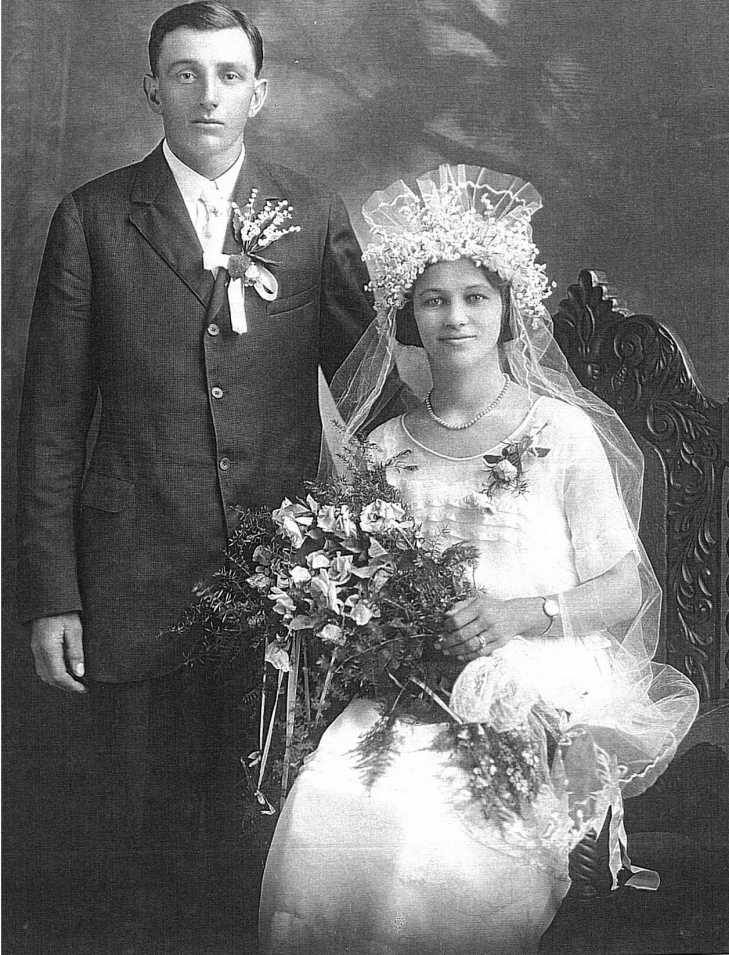
The wedding of Frank and Bessie Černík.
Frank and Bessie Černík Wedding.
The beginning of a lifelong partnership.
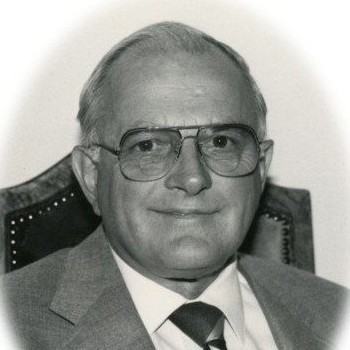
Portrait of Frank Bernard Černík.
Frank Bernard Černík.
Portrait.
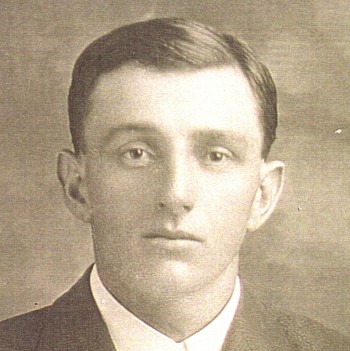
Portrait of Frank Černík.
Frank Černík.
Portrait.
-wedding.jpg)
The wedding of Frank Lewis Černík and Mary Vachal.
Frank Lewis and Mary Černík (Vachal) Wedding.
Wedding portrait.
-wedding.jpg)
Another wedding photo of Frank Lewis and Mary Černík.
Frank Lewis and Mary Černík Wedding.
Wedding portrait.
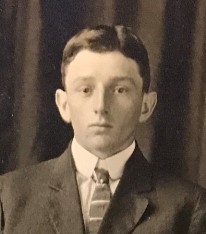
Frank M. Černík, approximately age 16.
Frank M. Černík, about age 16.
A young Frank Černík.
-enhanced.jpg)
Portrait of Jan and Rosalia Černík, née Veselá.
Jan and Rosalia Černík (Veselá).
Portrait.
.jpg)
Portrait of John Joseph and Rose Černík, née Citta.
John Joseph and Rose Černík (Citta).
Portrait.
-wedding.jpg)
The wedding of Lee and Ellen Ehlers, née Černík.
Lee and Ellen Ehlers (Černík) Wedding.
Wedding portrait.
-in-her-20s.jpg)
Marie C. Smith, née Černík, in her twenties.
Marie C. Smith (Černík) in her 20s.
Portrait.
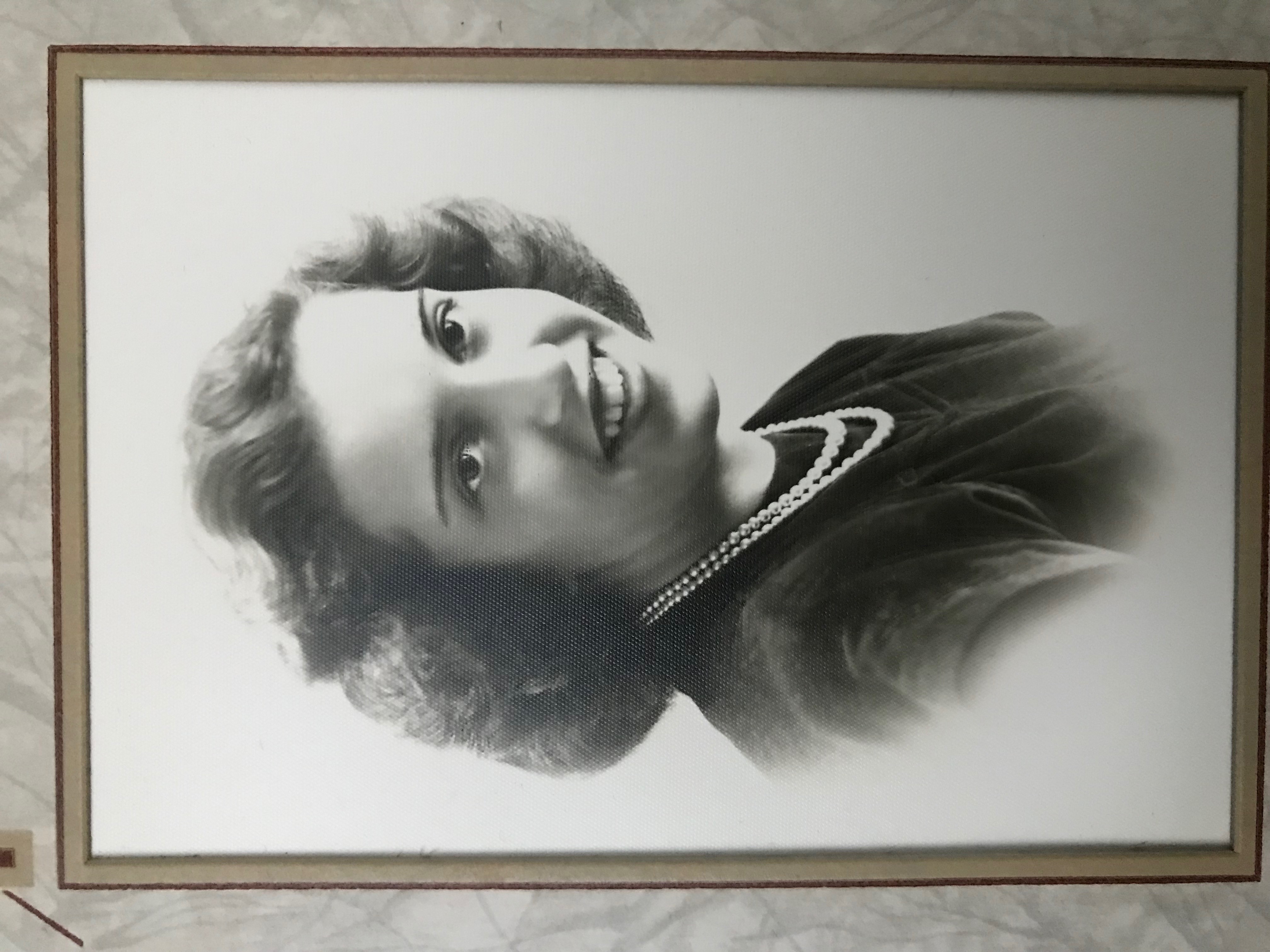
Marie Černík, high school portrait.
Marie Černík, High School.
High school portrait.

Portrait of Matě, Marie, and Frank Černík.
Matě, Marie and Frank Černík.
Family portrait.
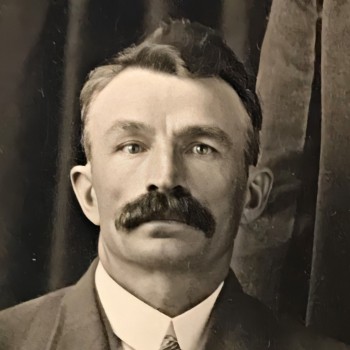
Portrait of Matěj Černík.
Matěj Černík.
Portrait.
-wedding-enhanced.jpg)
The wedding of Peter Paul Černík and Mary Těšína.
Peter Paul and Mary Černík (Těšína) Wedding.
Wedding portrait.
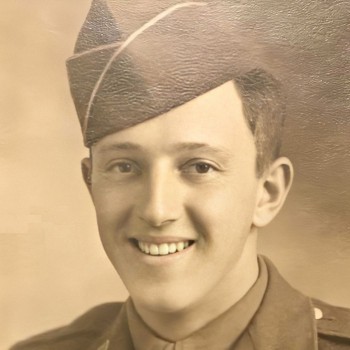
Portrait of Ray Černík.
Ray Černík.
Portrait.
Group Photos
0 itemsGroup Photos description

gallery-description1
gallery-title1
gallery-subtitle1
Unknown Cerniks
0 itemsUnknown Cerniks description
gallery-description1
gallery-title1
gallery-subtitle1
Comments
0 comment(s) on ""